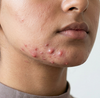



Okay bestie, let's have a real talk. You've tried the turmeric, the aloe gel, the "miracle" creams your aunt recommended. You've rage-applied every serum that promises "glass skin in 7 days" (spoiler: it didn't). And still — the acne keeps showing up like that one guest who never reads the room, and the dark spots refuse to leave even after the party is over.
You're not alone. And no, your skin is not "stubborn." It's just waiting for the right ingredients.
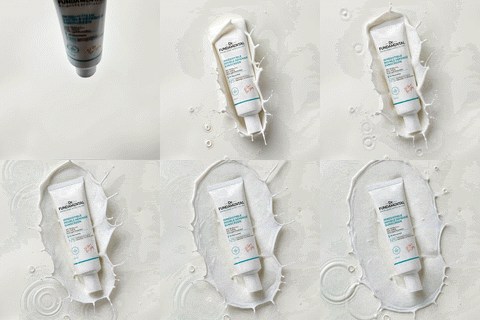
Enter: Niacinamide and Azelaic Acid — the dream duo that works while you sleep, stress-eats, and forget to drink water. Let's break down what they actually do, why they work beautifully together, and how the Dr. Fundamental N0.2 Glass Skin Anti Acne Serum packs both (plus Salicylic Acid!) into one bottle your skin will thank you for.
First Things First — Why Does Indian Skin Struggle So Much With Acne and Dark Spots?
Before we get into the ingredients, let's acknowledge the elephant in the room. Indian skin is more melanin-rich, which means every little breakout has a sequel — a dark spot. In dermatology terms, this is called Post-Inflammatory Hyperpigmentation (PIH), and it's extremely common in our skin tones.
Add the humidity, pollution, hard water, stress (exams? work? life?), and hormonal fluctuations — and you've got the perfect recipe for a never-ending breakout cycle. The acne comes, the spot stays, you're back to square one.
What you need isn't just an "anti-acne" product. You need something that fights active acne AND fades the evidence it leaves behind. That's exactly where a good niacinamide serum and azelaic acid combination changes the game.
What Is Niacinamide? (Your Skin's Chill BFF)
Niacinamide is Vitamin B3, and it's basically the overachiever of the skincare ingredient world. While other ingredients do one thing, niacinamide shows up and does five.
Here's what niacinamide serum benefits actually look like on your skin:
Controls Excess Oil: If your nose and forehead look like a oil slick by noon, niacinamide regulates sebum production so your skin stays balanced, not greasy. It's one of the most researched ingredients for oily and combination skin.
Minimises Pores: It doesn't "shrink" pores (nothing does, that's a marketing lie), but it genuinely reduces their appearance by keeping them clear and tightening the surrounding skin. Less clogged = less visible.
Fades Post-Acne Marks: This is the one we're all here for. Niacinamide interferes with the transfer of melanin (pigment) to the skin surface, which means those dark spots from last month's breakout start to fade with consistent use.
Strengthens Your Skin Barrier: This is SO underrated. When your barrier is weak (redness, sensitivity, that tight dry feeling after washing), every product you apply feels like a personal attack. Niacinamide builds up your barrier so your skin becomes resilient, not reactive.
Reduces Redness and Inflammation: Angry red acne? Niacinamide calms it down. It's anti-inflammatory without being irritating, which is why it's perfect even for sensitive skin.
No wonder the niacinamide serum for acne is one of the most Googled skincare terms right now. It genuinely delivers on what it promises.
What Is Azelaic Acid? (The Ingredient You Haven't Heard Enough About)
Azelaic Acid is a naturally occurring dicarboxylic acid found in grains like wheat and barley. It sounds boring — it is anything but. Dermatologists have been quietly prescribing it for decades for rosacea, acne, and melasma, while social media was busy hyping other things. But that's changing, and for good reason.
Here's what azelaic acid actually does:
Kills Acne-Causing Bacteria: It has direct antimicrobial properties, which means it goes after the bacteria (C. acnes) responsible for your breakouts at the source. It's particularly effective for hormonal acne and fungal acne — two types that don't always respond well to regular treatments.
Reduces Inflammation and Redness: Got the kind of acne that's angry and red and swollen? Azelaic acid calms it down with anti-inflammatory action that's gentle enough for sensitive and reactive skin.
Fades Dark Spots and Pigmentation: This is where azelaic acid really stands out. It inhibits an enzyme called tyrosinase, which controls melanin production. Result? Dark spots, acne marks, and uneven skin tone visibly fade over time. It's especially effective for post-inflammatory hyperpigmentation — which, as we established, is basically every Indian woman's arch nemesis.
Gently Exfoliates Inside Pores: Unlike harsh physical scrubs, azelaic acid works at a cellular level to unclog pores from within, reducing blackheads and whiteheads without disrupting your skin barrier.
Azelaic Acid and Niacinamide Together — Why This Combo Is a Big Deal
Okay so here's the thing: when you use azelaic acid and niacinamide in the same formula, they don't just coexist — they amplify each other.
Think of it like this: Azelaic acid goes in and fights the battle (bacteria, inflammation, clogged pores), and niacinamide cleans up the aftermath (marks, oil, barrier damage). One is your warrior, the other is your healer. Together, they give you:
- Fewer active breakouts
- Faster fading of existing dark spots
- Calmer, less reactive skin
- Balanced oil production
- A more even, clearer complexion overall
And all of this without the drama of harsh acids that strip your skin and leave you peeling and red for a week. The azelaic acid and niacinamide duo is famously well-tolerated — even by sensitive skin types.
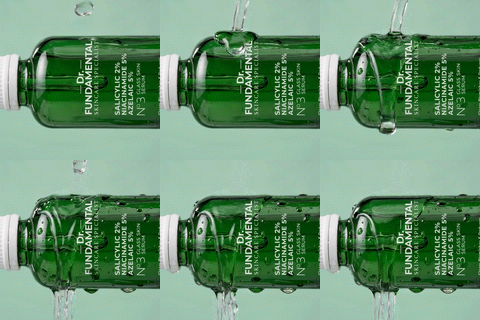
This is exactly why the Dr. Fundamental Glass Skin Anti Acne Serum was formulated with both — 5% Niacinamide and 5% Azelaic Acid — alongside 2% Salicylic Acid for triple-action acne care.
Meet the Triple Threat: Salicylic Acid + Niacinamide + Azelaic Acid
Most serums give you one active. Maybe two if you're lucky. The Dr. Fundamental N0.2 Glass Skin Anti Acne Serum gives you three clinically proven actives in one lightweight, barrier-friendly formula. Let's understand what each brings:
2% Salicylic Acid (Encapsulated) — The deep cleaner. Salicylic acid is a BHA (Beta Hydroxy Acid) that is oil-soluble, meaning it gets inside your pores, dissolves the buildup of sebum and dead skin cells, and clears blackheads and whiteheads from within. The "encapsulated" version used here is gentler and releases slowly, which means effective exfoliation without over-stripping your skin. Goodbye, congested pores.
5% Niacinamide — The multi-tasker. As we've established above, this controls oil, fades marks, calms inflammation, and repairs your barrier. It's the glue that holds this formula together.
5% Azelaic Acid — The spot specialist. Targets bacteria, reduces redness, and fades pigmentation with consistent use. A true best friend for acne-prone Indian skin.
The result? A face serum for acne that doesn't just treat one problem — it treats the whole cycle. Active acne, oily pores, dark marks, and barrier sensitivity. All in one bottle. At ₹549.
Who Should Use This Serum?
Honestly? Most of us. But especially if you:
- Have oily or combination skin that's constantly breaking out
- Deal with blackheads and whiteheads (hello, nose and forehead)
- Have post-acne dark spots that just won't fade
- Struggle with hormonal or fungal acne
- Have tried harsh treatments and ended up with irritated, sensitised skin
- Want clear skin without a 17-step routine
It's a niacinamide serum for oily skin that balances without drying, treats without irritating, and improves with every use. It's fragrance-free, non-comedogenic (won't clog pores), dermatologically tested, and sensitive skin friendly. So if your skin has been through it — this is a safe starting point.
How to Use It the Right Way
Using a serum correctly is half the battle. Here's the routine:
Morning Routine:
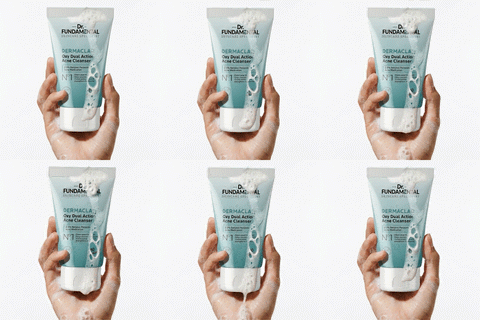
- Cleanse with a gentle face wash (try the Dr. Fundamental N0.1 Dermaclar Oxy Acne Cleanser — it's formulated with Benzoyl Peroxide to clear skin and control bacteria right from the first step)
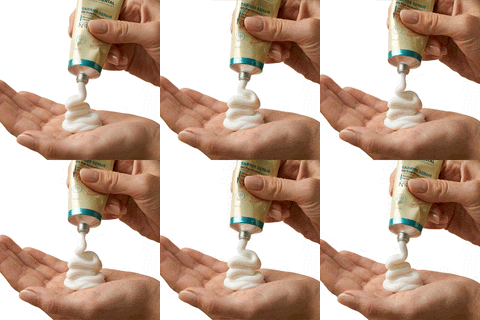
- Apply 2-3 drops of the Glass Skin Serum on clean, dry skin. Pat gently — no rubbing
- Follow with a moisturiser (the N0.4 Barrier Repair Oil Free Moisturizer is a great match — lightweight, ceramide-based, and perfect for acne-prone skin)
- Finish with SPF 30 or higher. Sunscreen is NON-NEGOTIABLE when you're using actives. Check out the N0.5 Irresistible Double Defence Sunscreen — it even has 5% Niacinamide in it, so it's working for your skin while protecting it
Night Routine: Same as above, skip the SPF. This is when your skin is in repair mode, so actives work especially well at night.
Pro tip for beginners: Start with once daily (night is best). After 2 weeks, if your skin is tolerating it well, move to twice daily. Go slow — there's no race.
Avoid layering with: Retinol, AHA/BHA peels, or other strong actives unless a dermatologist has told you otherwise. Too many actives at once = irritated, confused skin.
When Will You See Results?
We know you want to know. And we'll be honest:
- Week 1-2: Your skin starts adjusting. You may notice reduced oiliness and slightly fewer new breakouts.
- Week 2-3: Active acne reduces visibly. Blackheads start clearing up. Pores look less clogged.
- Week 4-6: This is where the magic shows. Existing dark spots begin to fade, skin texture improves, overall complexion looks more even and clear.
The clinical data from Dr. Fundamental's own user testing supports this — 93% of users felt the serum reduced acne scars and inflammation, and 89% saw improvement in acne marks and uneven skin tone. These aren't overnight numbers — these are consistent-use numbers. And that's what real skincare looks like.
The Full Routine for Acne-Prone Skin
If you're building a skincare routine from scratch for acne-prone skin, the Glass Skin Serum is Step 2 in the Dr. Fundamental 5-step system. Here's the full picture:
Step 1 — Cleanse: N0.1 Dermaclar Oxy Acne Cleanser (2.5% Benzoyl Peroxide — controls bacteria, unclogs pores)
Step 2 — Treat Active Acne: N0.2 Glass Skin Anti Acne Serum (that's this one — targets blackheads, whiteheads, active breakouts)
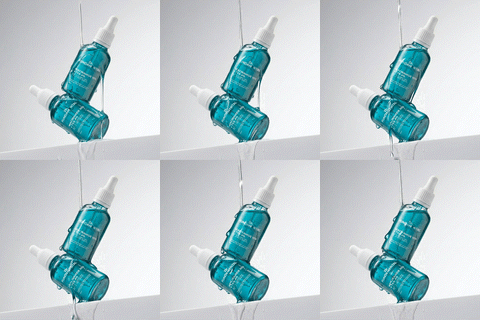
Step 3 — Fade Marks: N0.3 Clarifying Face Serum (4% Tranexamic Acid + 10% Niacinamide — for deep pigmentation, acne marks, and uneven tone. If your dark spots are stubborn, this is your next weapon)
Step 4 — Moisturise: N0.4 Barrier Repair Oil Free Moisturizer (Ceramides + Panthenol — repairs and protects)
Step 5 — Protect: N0.5 Irresistible Double Defence Sunscreen (SPF 50 PA++++ with Niacinamide — a sunscreen that doubles as a brightening treatment)
You can explore the full Dr. Fundamental collection here — every product in the range is designed to work together, addressing the acne cycle from start to finish.
Also worth reading from our blog:
- Niacinamide Serum for Oily Skin: How It Controls Oil & Breakouts — deep dive into how niacinamide specifically works for oily skin
- Benzoyl Peroxide Face Wash for Acne: Benefits & How to Use — if you want to understand Step 1 better
- Ceramide Moisturizer for Acne-Prone Skin: Does It Help? — because moisturiser matters more than you think
Common Mistakes to Avoid With Niacinamide + Azelaic Acid Serums
Since we're having a real chat, let's cover the things nobody tells you:
Skipping sunscreen. You cannot use actives and then skip SPF. Niacinamide and Azelaic Acid help fade pigmentation, but UV exposure creates MORE pigmentation. You'll be taking one step forward and two steps back. Please wear sunscreen — every single day, even indoors near windows.
Using too much too soon. More product does not mean faster results. 2-3 drops is enough for your entire face. Using more wastes product and can irritate your skin.
Expecting overnight results. Skincare is a slow romance, not a Tinder date. Give it 4-6 weeks before judging. Take photos every two weeks so you can actually see the difference — our eyes adjust and we miss progress.
Layering with everything at once. Niacinamide is quite compatible, but don't use this serum on the same day as your retinol, physical scrubs, or AHA peels. Keep actives simple and strategic.
Stopping when skin "looks fine." The moment your skin looks good is not the moment to stop. That IS your skin with the serum. Keep going.
Quick Reality Check: Niacinamide Serum vs. Other Popular Acne Treatments
|
Niacinamide + Azelaic Acid Serum |
Benzoyl Peroxide Alone |
Salicylic Acid Alone |
|
|
Treats Active Acne |
✅ |
✅ |
✅ |
|
Fades Dark Spots |
✅ |
❌ |
Partially |
|
Gentle on Barrier |
✅ |
❌ (can be drying) |
Partially |
|
Suits Sensitive Skin |
✅ |
Often not |
Depends on % |
|
Brightens Skin |
✅ |
❌ |
❌ |
|
Daily Use |
✅ |
With caution |
Yes |
The niacinamide serum for acne wins on range. It doesn't just fight breakouts — it deals with everything acne leaves in its wake.
The Bottom Line
Acne is frustrating. The marks it leaves behind are even more so. But you don't need a complicated 10-product routine or expensive dermatology visits to deal with it. You need the right ingredients, used consistently, in a formula that doesn't damage your barrier in the process.
Niacinamide and azelaic acid are two of the most evidence-backed, dermatologist-recommended actives for acne-prone skin — and the Dr. Fundamental Glass Skin Anti Acne Serum puts both of them (plus Salicylic Acid) in one affordable, thoughtfully formulated bottle.
At ₹549 for 30ml, it's not asking for much. Your skin, however, will be asking — "where was this all along?"
Give it 6 weeks. Take photos. And come back to tell us how it went.