


If you have ever stood in a pharmacy aisle staring at two acne face washes — one with benzoyl peroxide and one with salicylic acid — wondering which one is actually going to clear your skin, you are not alone. It is one of the most common questions in acne skincare. Both ingredients are clinically proven. Both are popular. And both show up in everything from drugstore picks to dermatologist recommendations.
But they work differently. They suit different skin types. And choosing the wrong one can either irritate your skin or simply not do enough.
In this blog, we break down benzoyl peroxide vs salicylic acid in the context of your daily cleanser — how each one works, who should use which, and how to make an informed decision for your specific skin concerns.
What Is Benzoyl Peroxide and How Does It Fight Acne?
Benzoyl peroxide is an antibacterial active ingredient that works by introducing oxygen directly into the pore. Since the bacteria responsible for most inflammatory acne (Cutibacterium acnes, formerly called P. acnes) cannot survive in an oxygen-rich environment, benzoyl peroxide essentially suffocates them.
Here is what makes it unique: it targets the root cause of bacterial acne rather than just managing the symptoms. It reduces existing breakouts and prevents new ones from forming by controlling bacterial colonisation in the pore.
It also has a mild keratolytic effect, which means it gently encourages the shedding of dead skin cells — helping to prevent the pore clogging that leads to whiteheads and blackheads.
Benzoyl peroxide works best for:
- Inflammatory acne (red, pus-filled pimples)
- Hormonal breakouts along the jawline and chin
- Fungal acne (because it is antibacterial, not antifungal — but it helps by removing debris)
- Oily, acne-prone skin that tends to have active, recurring breakouts
Common concern: Many people worry that benzoyl peroxide will bleach their towels or irritate their skin. At 2.5%, the concentration is effective but significantly gentler than the 5% or 10% formulations that cause most of the sensitivity complaints you read about online.
What Is Salicylic Acid and How Does It Fight Acne?
Salicylic acid belongs to a class of ingredients called beta-hydroxy acids (BHAs). Unlike water-soluble exfoliants that work only on the skin's surface, salicylic acid is oil-soluble — meaning it can penetrate through sebum and get inside the pore to dissolve the mix of dead skin cells and oil (called a comedone) that causes clogged pores.
This makes salicylic acid excellent at treating and preventing blackheads and whiteheads. It also has mild anti-inflammatory properties that help calm redness around existing breakouts.
Salicylic acid works best for:
- Non-inflammatory acne (blackheads, whiteheads, milia)
- Congested pores and rough skin texture
- Oily skin prone to clogging rather than active infection
- Mild, surface-level acne
The limitation: Salicylic acid is not antibacterial. It does not kill acne-causing bacteria. So if your breakouts are primarily inflammatory (red, painful pimples), salicylic acid alone may not be sufficient.
Benzoyl Peroxide vs Salicylic Acid: Head-to-Head Comparison
|
Feature |
Benzoyl Peroxide |
Salicylic Acid |
|
Mechanism |
Kills acne bacteria |
Exfoliates inside the pore |
|
Best acne type |
Inflammatory, bacterial |
Non-inflammatory, comedonal |
|
Penetration |
Surface to mid-pore |
Deep into pore (oil-soluble) |
|
Sebum control |
Yes |
Moderate |
|
Anti-inflammatory |
Yes |
Mild |
|
Sensitivity risk |
Moderate (at high %) |
Low |
|
Suitable for sensitive skin |
Yes, at 2.5% |
Yes, at 1–2% |
Which One Should You Use as a Daily Cleanser?
The answer depends on the nature of your breakouts.
Choose a benzoyl peroxide acne face wash if:
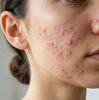
- You get red, inflamed pimples that fill with pus
- Your acne tends to be hormonal or recurring
- You have oily skin with active, bacterial-type breakouts
- You want a cleanser that actually treats acne while cleansing
Choose a salicylic acid cleanser if:
- Your main concern is blackheads and clogged pores
- Your skin is more congested than inflamed
- You are dealing with whiteheads and rough texture
- You are looking for a gentle daily exfoliating cleanser
What if you need both? Some formulations combine both ingredients at low concentrations to address both bacterial acne and pore congestion simultaneously. This can be a smart option if your skin presents a mix of both concerns — which is common for oily, combination skin.
Why a Gel-Based Cleanser Matters for Acne-Prone, Oily Skin
The base of your cleanser is just as important as the active ingredient. Cream or milk cleansers work beautifully for dry and normal skin types — but if you have oily or acne-prone skin, a gel-based cleanser is almost always the better choice.
Here is why:
A gel based cleanser has a water-based, lightweight texture that cuts through excess sebum efficiently without leaving a film behind. It allows actives like benzoyl peroxide to be distributed evenly across the skin, ensuring consistent contact time with the pore. It rinses cleanly, which means no residue that could potentially contribute to congestion.
For anyone using a cleanser for oily skin, a gel texture also provides the tactile sensation of a thorough cleanse without stripping the skin so aggressively that it triggers more oil production as a rebound response.
The Double-Cleanse Question: Where Does an Oil Cleanser Fit In?
You might have heard about the double-cleanse method, which involves using an oil cleanser for oily skin as a first step to dissolve sunscreen and makeup, followed by a water-based or active cleanser as the second step.
Yes — even oily skin can benefit from an oil cleanser in the first step. Oil dissolves oil, meaning an oil-based first cleanse removes sunscreen, pollution, and sebum plugs more thoroughly than a water-based cleanser alone. It does not make oily skin oilier if formulated correctly and rinsed clean.
Your active acne face wash — whether benzoyl peroxide or salicylic acid — should always be the second cleanse in a double-cleanse routine. This ensures the active ingredient has direct, unobstructed contact with clean skin rather than working through a layer of sunscreen or makeup residue.
Introducing Dr. Fundamental's Dermaclar Oxy Acne Cleanser
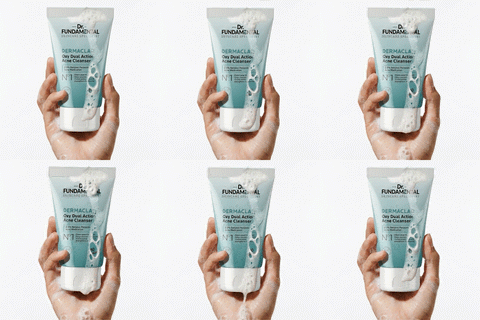
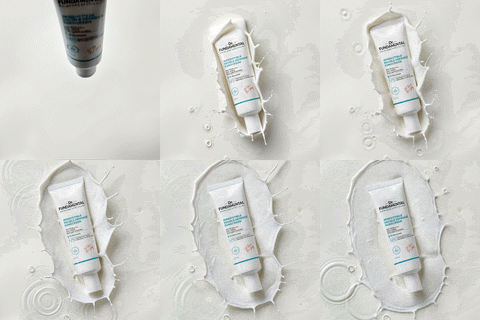
If you have decided that a benzoyl peroxide-based cleanser is the right choice for your skin, the Dr. Fundamental Dermaclar Oxy Acne Cleanser is formulated specifically for Indian skin dealing with oily, acne-prone conditions.
Here is what makes it stand apart:
2.5% Encapsulated Benzoyl Peroxide — The hero ingredient is delivered in encapsulated form, which means it releases gradually upon contact with skin instead of hitting all at once. This dramatically reduces the irritation, dryness, and flaking associated with standard benzoyl peroxide formulations while maintaining the same antibacterial efficacy.
Dual-active formula — The cleanser also contains a low concentration of Salicylic Acid alongside the benzoyl peroxide, giving you the benefits of both ingredients in one wash. The salicylic acid works inside the pore to prevent congestion while the benzoyl peroxide addresses bacterial acne on contact.
Barrier-supportive ingredients — Panthenol (Vitamin B5), Allantoin, and Hyaluronic Acid are included to actively soothe, calm, and hydrate the skin during the cleansing process. This makes it genuinely usable as a gentle cleanser for oily skin rather than a harsh stripping wash.
Gel texture — Formulated as a proper gel based cleanser, it lathers well, rinses clean, and leaves no residue — ideal for oily and combination skin.
Clinical results:
- 93% elimination of acne-causing bacteria within 1 minute of use
- 97% of users noticed a visible reduction in acne and fewer new breakouts
- 84% reported the formula felt non-drying on skin
- 79% noticed a stronger, healthier skin barrier with continued use
Best for: Normal to oily, combination, acne-prone, and sensitive skin dealing with whiteheads, blackheads, hormonal acne, fungal acne, excess oil, and open pores.
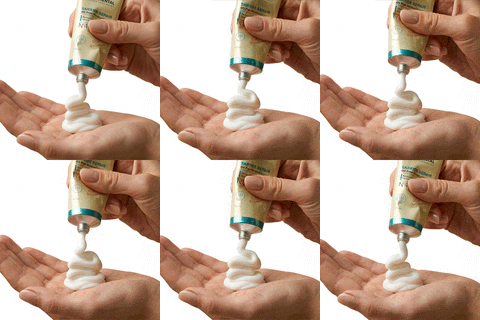
How to use: Massage a small amount onto damp skin, leave for 2 minutes to allow the actives to work, then rinse with lukewarm water. Use up to twice daily based on skin tolerance. Always follow with a moisturizer and SPF in the morning.
→ Shop the Dermaclar Oxy Acne Cleanser
How to Build a Routine Around Your Acne Cleanser
A cleanser alone will not resolve persistent acne — it needs to be part of a structured routine. Here is how to layer products effectively after using an active acne face wash:
Step 1 — Cleanse: Use the Dermaclar Oxy Acne Cleanser morning and evening. Leave on for 2 minutes before rinsing.
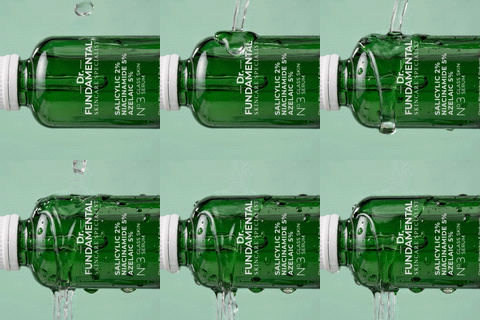
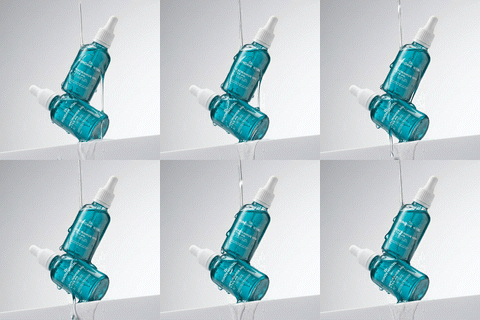
Step 2 — Treat: Follow with a targeted serum. If you are dealing with blackheads and whiteheads after cleansing, the Glass Skin Anti Acne Serum addresses congestion and pore clarity. For active acne and post-acne marks, the Clarifying Face Serum with Niacinamide and Tranexamic Acid works to calm breakouts and fade pigmentation. Learn more about how Niacinamide controls oil and breakouts on oily skin.
Step 3 — Moisturise: Never skip this step. Active cleansers like benzoyl peroxide can temporarily increase transepidermal water loss. The Barrier Repair Oil Free Moisturizer is specifically formulated to restore the barrier without adding oil.
Step 4 — Protect: In the morning, always apply SPF. Benzoyl peroxide can make skin more susceptible to UV damage, and post-acne marks will darken significantly without daily sun protection. The Irresistible Double Defence Sunscreen is a lightweight option that will not clog pores.
For a deeper understanding of benzoyl peroxide as a standalone ingredient, read Benzoyl Peroxide Face Wash for Acne: Benefits & How to Use on the Dr. Fundamental blog.
Common Mistakes to Avoid When Using an Acne Face Wash
Using too much product. A coin-sized amount is sufficient. Using more does not increase efficacy — it just increases the risk of dryness.
Rinsing immediately. Both benzoyl peroxide and salicylic acid need contact time to work. The Dr. Fundamental recommendation of a 2-minute leave-on is specifically calculated for this.
Skipping moisturizer. The most common mistake in acne routines. Cleansers that treat acne should always be followed by a non-comedogenic moisturizer. Skipping this step leads to a damaged skin barrier, which worsens acne long-term. Learn why barrier repair is so critical in the Ceramide Moisturizer for Acne-Prone Skin guide.
Skipping SPF. See above. Non-negotiable. If sun protection for oily skin feels heavy or greasy to you, check out this guide on choosing the right SPF 50 Sunscreen for Face — or specifically one with Niacinamide for Oily Skin for added oil control.
Mixing with too many other actives. If your cleanser already contains both benzoyl peroxide and salicylic acid, you do not need to add another high-strength exfoliant or retinol into the same routine unless directed by a dermatologist.
The Verdict
Both benzoyl peroxide and salicylic acid are effective for acne — but they target different aspects of the problem. Salicylic acid is a pore-clearing exfoliant best suited for blackheads and congestion. Benzoyl peroxide is an antibacterial agent that kills the bacteria driving inflammatory breakouts.
For most people with oily, acne-prone Indian skin dealing with recurring pimples, excess sebum, and clogged pores, a gel based cleanser combining both actives — like the Dr. Fundamental Dermaclar Oxy Acne Cleanser — offers the most comprehensive cleansing approach without requiring multiple products.
It is gentle enough to use twice daily, formulated with barrier-supportive ingredients, and clinically tested to show real results. If you are looking for a genuinely effective yet gentle cleanser for oily skin that also treats active acne, this is the one to try.
→ Try the Dermaclar Oxy Acne Cleanser — Now at Rs. 650
Always perform a patch test before introducing any new active ingredient to your routine. If you experience persistent irritation, consult a board-certified dermatologist.