




Let’s be honest—buying sunscreen sounds simple… until you actually try to pick one.
Too many options.
Too many claims.
And half of them either feel greasy, leave a white cast, or just sit on your face like you applied glue 😅
If you’ve been searching for the best sunscreen for face, especially for oily or sensitive skin, you’ve probably realized one thing—SPF alone isn’t enough. Texture, finish, and comfort matter just as much.
So let’s break it down properly—what SPF 50 actually means, why it matters, and how to choose something you’ll actually use daily.
What Does SPF 50 Really Mean?
SPF (Sun Protection Factor) tells you how well a sunscreen protects your skin from UVB rays—the ones responsible for sunburn and skin damage.
An SPF 50 sunscreen offers high protection, blocking a significant percentage of UV rays during daily exposure.
But here’s the thing—SPF only works if:
- You apply enough
- You use it daily
- You choose a formula you’re comfortable wearing
👉 So it’s not just about “high SPF”—it’s about usability.
Also read this:- Sunscreen with Niacinamide for Oily Skin: Does It Work?
Why SPF 50 Sunscreen Is Important for Your Face
Your face is exposed to sunlight almost every day—whether you’re stepping out for 5 minutes or sitting near a window.
Over time, this exposure can lead to:
- Uneven skin tone
- Pigmentation
- Slower healing of acne marks
- Dull-looking skin
Using a spf 50 sunscreen daily helps reduce this long-term damage and keeps your skin looking more even and healthy.
Choosing the Best Sunscreen for Face
Now comes the real question—how do you choose the best sunscreen for face?
It’s not just about SPF. You need to look at how it behaves on your skin.
A good sunscreen should:
- Feel comfortable (not heavy or sticky)
- Blend easily
- Work for your skin type
- Be easy to reapply
Because the sunscreen you enjoy using… is the one you’ll actually use consistently.
Why Texture Matters More Than SPF Alone
This is where most people go wrong.
You might buy a high SPF product—but if it feels heavy, you’ll avoid using it.
That’s why formulations like fluid sunscreen and liquid sunscreen are becoming more popular.
They:
- Spread easily
- Feel lightweight
- Don’t sit heavily on the skin
- Work well for layering
Especially for oily, combination, or humid conditions—this makes a huge difference.
What About Sensitive Skin?
If your skin reacts easily, choosing the right sunscreen becomes even more important.
A sensitive skin best sunscreen spf 50 should:
- Feel gentle on application
- Not cause discomfort or heaviness
- Sit comfortably on the skin
Often, lightweight textures help here because they don’t overwhelm the skin.
Also read this:- Fluid Sunscreen for Face: Benefits of Lightweight Protection
How to Choose the Right SPF 50 Sunscreen
Instead of overthinking, just focus on a few key things:
- Texture (light vs heavy)
- Skin compatibility (oily, dry, sensitive)
- Finish (natural vs greasy)
- Ease of daily use
A fluid sunscreen or liquid sunscreen usually ticks most of these boxes for everyday wear.
A Practical Option for Daily Use
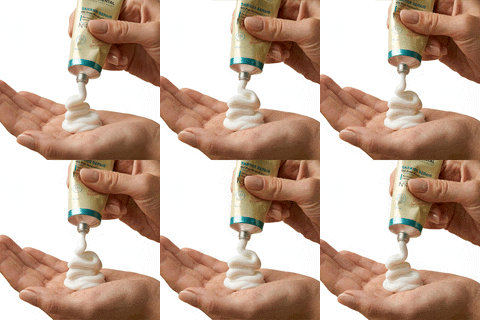
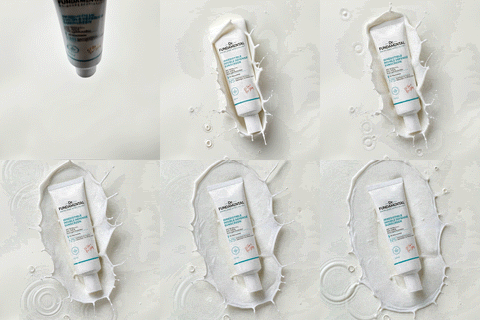
If you’re looking for something that balances protection and comfort, Dr. Fundamental Irresistible Double Defence Sunscreen SPF 50 PA++++ is designed to feel lightweight with a natural finish.
Instead of feeling heavy or greasy, it spreads easily on the skin, making it more suitable for daily use—especially if you prefer a light sunscreen that doesn’t feel like an extra layer.
And that’s the real goal—finding something you’ll actually use every single day.
Common Mistakes While Choosing Sunscreen
Sometimes the problem isn’t sunscreen—it’s how we choose it.
Avoid:
- Picking only based on SPF
- Ignoring texture
- Choosing something too heavy for your skin
- Not testing comfort for daily wear
Final Thoughts
Finding the right spf 50 sunscreen isn’t about chasing the highest protection—it’s about finding the right balance between protection and comfort.
A lightweight, easy-to-use formula—like a fluid sunscreen or liquid sunscreen—can make daily sunscreen use feel effortless instead of forced.
And once sunscreen becomes a habit instead of a task, your skin will thank you for it in the long run.