





Okay, real talk — how many times have you washed your face in the shower at 11 PM, half asleep, using the same random face wash you grabbed back in the morning before college or work? No judgment, we've all been there. But here's the thing your skin desperately wants you to know: your face has completely different needs at 7 AM versus 11 PM, and treating both the same way might be exactly why your acne refuses to budge.
Think about it like this — you don't wear the same outfit to a wedding and to bed, right? Your skin is basically dealing with two totally different "events" every single day. Morning skin is dealing with overnight oil buildup and getting ready to face pollution, sun, and whatever Delhi or Mumbai traffic throws at it. Night skin, on the other hand, is covered in a full day's worth of sunscreen, sweat, dust, and that invisible layer of grime you can't even see but is absolutely sitting on your pores. Cleansing them the exact same way is like using the same strategy for a sprint and a marathon — it just doesn't work the same.
So let's get into why this matters so much for acne face wash routines specifically, and how to actually nail the AM/PM cleansing game without overcomplicating your life.
Why Your Skin Isn't the Same in the Morning and at Night
Here's something most of us never think about — your skin runs on its own internal clock, kind of like you do. During the day, your skin is in "defense mode." It's trying to protect itself from pollution, UV rays, and bacteria sitting on your phone screen (yes, that counts too). At night, your skin switches gears completely and goes into "repair mode," working on cell turnover and healing whatever damage happened during the day.
This is exactly why dermatologists and skincare experts keep saying that acne-prone skin needs a slightly different approach depending on the time of day. If you're using a harsh, stripping wash in the morning, you're basically telling your oil glands to panic and produce even more sebum to compensate — hello, midday shine and new breakouts by lunchtime. And if you're skipping a proper cleanse at night, you're letting a full day of sunscreen, sweat, and city pollution sit on your skin for 8 hours straight while you sleep. Neither situation is cute for acne-prone skin.
A few things change in your skin's behaviour throughout the day that genuinely affect how you should be washing your face:
- Sebum production tends to spike overnight, so you wake up oilier than you went to bed, especially around the T-zone.
- Daytime skin is constantly exposed to environmental stressors like dust, pollution, and UV exposure that sit on the surface.
- Nighttime skin accumulates sunscreen, makeup (if you wear any), and the day's oil and sweat, none of which rinses off with plain water.
- Skin cell turnover and repair happen primarily while you sleep, so a clean canvas at night actually supports that process better.
Basically, your morning cleanse is about damage control before the day starts, and your night cleanse is about damage control after the day ends — and acne-prone skin can't afford to skip either one.
Morning Cleansing: Less Is More (Yes, Really)
This one surprises a lot of people, but morning cleansing for acne-prone skin should actually be the gentler of the two. You're not removing makeup or a full day's grime — you're mostly just washing away the oil and sweat your skin produced overnight while you slept. Going in with an aggressive scrub or a foaming cleanser packed with strong actives first thing in the morning can actually backfire and leave your skin tighter, redder, and somehow oilier by afternoon (the dreaded rebound oiliness).
What you actually want in the AM is a mild cleanser for oily skin that removes overnight buildup without disturbing your skin barrier. A barrier-friendly, slightly active cleanser — something gel-based rather than a harsh foaming bar — tends to work best here because it cleans without leaving that tight, squeaky feeling that fools you into thinking it's "working."
Here's what an effective morning cleanse should be doing for acne-prone skin:
- Removing excess sebum and sweat that built up overnight, particularly around the forehead, nose, and chin.
- Keeping the skin barrier intact instead of stripping it, since a damaged barrier is one of the biggest hidden reasons acne keeps coming back.
- Prepping the skin so your morning serum, moisturiser, and SPF actually absorb properly instead of sitting on a layer of leftover oil.
- Controlling bacteria without over-drying, since acne-causing bacteria thrives on excess oil left behind from an incomplete cleanse.
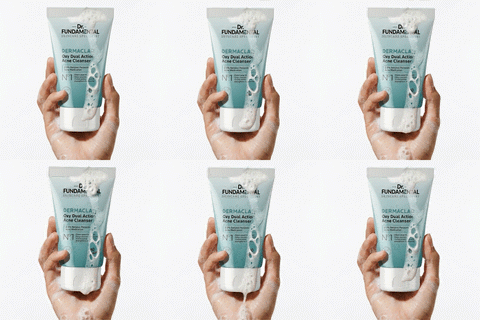
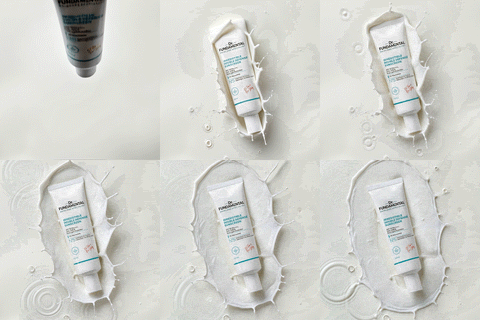
This is honestly where a cleanser like the Dermaclar Oxy Acne Face Wash earns its spot in the AM routine. It's a gel-based formula with 2.5% encapsulated Benzoyl Peroxide, which sounds intense on paper, but the encapsulation means it releases slowly instead of blasting your skin all at once — so you get the bacteria-fighting benefits without that classic "my face feels like sandpaper" aftermath. It's gentle enough to use first thing in the morning while still doing the actual work of controlling sebum and keeping pores clear.
Night Cleansing: Where the Real Work Happens
If morning is about light maintenance, night is where you bring out the bigger guns — because by the end of the day, your skin is genuinely dealing with a lot. Sunscreen residue, pollution particles, sweat from your commute, oil from touching your face fifty times without realising it — all of that needs to come off before you sleep, or it's just sitting there clogging pores for the next eight hours.
This is the step most people with acne-prone skin underestimate the most. Going to bed without properly cleansing is essentially asking for a breakout, because the bacteria that cause acne feed directly on the oil and gunk that's left behind. A lot of dermatology-led blogs covering this topic recommend double cleansing at night, especially if you wear sunscreen or makeup during the day, starting with an oil-based cleanser to break down SPF and surface buildup, followed by a proper cleanser for oily skin to actually treat the acne underneath.
Your night routine should ideally be doing more than just "removing dirt" — it should be treating:
- Breaking down sunscreen, oil, and pollution that plain water alone simply cannot rinse away.
- Targeting acne-causing bacteria directly, since nighttime is when your skin has the most uninterrupted time to actually absorb active ingredients.
- Supporting your skin's natural overnight repair process by giving it a clean base to regenerate from.
- Setting up the rest of your night routine (serum, moisturiser) to actually penetrate instead of sitting on top of leftover residue.
This is also exactly where the same Dermaclar cleanser pulls double duty. Since it's formulated to be used up to twice daily depending on your skin's tolerance, using it at night means the Benzoyl Peroxide gets uninterrupted hours to actually target the bacteria sitting in your pores, while ingredients like Hyaluronic Acid and Panthenol work quietly in the background to stop your barrier from feeling stripped. It's basically multitasking while you sleep, which, let's be honest, is the only kind of multitasking we actually enjoy.
So... One Cleanser for Both, or Two Different Ones?
This is probably the question you actually came here for, so let's settle it. You genuinely don't need two separate cleansers sitting in your bathroom cabinet for AM and PM use — that's more of a marketing trend than a dermatological necessity. What matters far more is choosing one well-formulated, mild cleanser for oily skin that's gentle enough for daily morning use but effective enough to handle the night's heavier buildup.
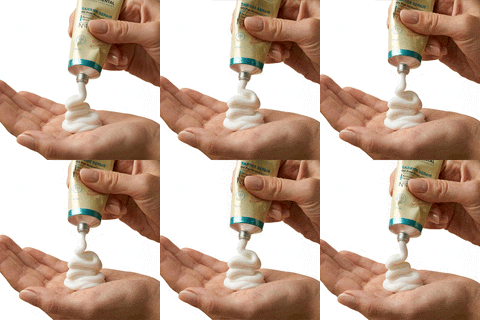
The trick is in the technique, not necessarily the product. In the morning, a quick 30-45 second gentle massage is usually enough since you're dealing with lighter buildup. At night, you can afford to take it slower — really massaging it in for that full 2-minute window the product label often recommends, especially when you're using something with active ingredients like Benzoyl Peroxide that need a little contact time to actually do their job.
If you do wear heavy makeup or thick SPF daily, that's the one scenario where a pre-cleanse step genuinely helps — using a light oil or micellar water first to dissolve the surface layer before going in with your actual treatment cleanser at night. For most people who wear lightweight sunscreen and minimal makeup, though, one solid cleanser used consistently morning and night does the job just fine.
A Few Things People Get Wrong With AM/PM Cleansing
We've all fallen into at least one of these traps, so consider this your gentle, non-judgmental wake-up call (pun very much intended).
- Over-cleansing because you think more washing equals less oil — it actually does the opposite and triggers more sebum production.
- Using the exact same harsh, stripping cleanser both times a day, leaving skin in a constant tug-of-war between dryness and oiliness.
- Skipping the night cleanse entirely on tired days, which lets a full day of buildup sit on the skin overnight.
- Expecting overnight results from an active ingredient like Benzoyl Peroxide and quitting within the first week when slight purging or tingling shows up.
- Forgetting sunscreen after the morning cleanse, which undoes a lot of the calming work your cleanser just did.
If you've made even one of these mistakes, don't spiral — literally everyone has. The fix is usually just consistency and a little patience while your skin adjusts to a proper rhythm.
Building It Into a Full Routine
Cleansing is obviously just step one, but it sets the tone for everything that follows. Once your skin is properly cleansed (morning or night), the order generally goes cleanser, treatment serum, moisturiser, and SPF if it's daytime. Since acne-prone skin often deals with barrier damage from harsh treatments or over-cleansing, pairing your cleanse with a proper ceramide-based moisturiser afterward genuinely makes a difference in how your skin tolerates active ingredients long-term — something we've broken down in more detail in our blog on ceramide moisturisers for acne-prone skin, if you want to go deeper into that side of the routine.
The biggest thing to remember here is that consistency beats intensity every single time. A gentle, well-formulated cleanser used correctly twice a day will always outperform an aggressive one used inconsistently. Your skin doesn't need you to punish it into clearing up — it needs a routine it can actually trust, morning after morning, night after night.
At the end of the day (pun intended, again), acne-prone skin isn't asking for ten products and a 12-step routine. It's asking for the right product, used the right way, at the right time. Get that part sorted, and the rest of your skincare routine has a much easier job to do.