


Okay real talk — if I had a rupee for every time someone messaged me "which serum will remove my acne marks fastest" while clearly skipping sunscreen, I'd have enough to retire on a beach somewhere. We get so obsessed with serums, brightening creams, and that one viral ingredient everyone's hoarding that we completely ignore the one product doing the heaviest lifting. And that product is, quite boringly, sunscreen.
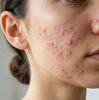
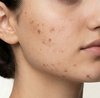
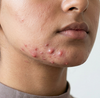
Here's the thing nobody tells you at the counter: those stubborn brown or reddish patches left behind after a pimple finally calms down aren't scars in the permanent sense. They're called post-inflammatory hyperpigmentation, and they fade on their own — eventually — unless the sun keeps re-triggering them. Every single time you step out without protection, UV rays tell your skin to produce more melanin right where the inflammation already happened, and that mark gets darker and stays longer. So you could be using the fanciest best sunscreen for face serum in your skincare drawer, and it still won't out-fade what daily sun exposure is doing in the background. It's like mopping the floor while the tap is still running.
So Why Does Sunscreen Get Ignored By Acne-Prone Girls?
Most of us with oily or breakout-prone skin have a complicated relationship with sunscreen, and honestly, fair enough. The ones we grew up using were thick, white, sticky, and made our face look like a Holi paint mishap by lunchtime. So we quietly skipped it, told ourselves "my moisturizer has SPF anyway," and moved on with our lives.
But that old grudge is costing us. Dermatology research consistently shows that UV radiation in India is brutal almost the entire year, not just in summer, and it's the single biggest reason pigmentation and dark spots refuse to fade even with the best treatments. If your routine includes acids, retinoids, or brightening actives but no daily SPF, you're basically doing two steps forward and one big step back every single time you step into sunlight.
A few signs you might be one of the many people quietly skipping sun protection:
- You only apply sunscreen "if you're going somewhere," not on regular work-from-home or college days
- You believe cloudy or rainy days don't need SPF (they absolutely do)
- Your old sunscreen left a greasy film, so now you've sworn off the entire category
- You think your foundation or BB cream's "SPF inside" is doing the actual protecting
If even one of these sounds like you, no judgment — most of us have been there. The fix isn't more willpower, it's finding a formula that doesn't feel like punishment to wear every morning.
What Actually Makes Sunscreen the "Number One" Acne-Mark Fix
This isn't an exaggeration for clicks. Dermatologists genuinely rank consistent sun protection as the foundational step in any pigmentation or acne-mark treatment plan, because no brightening ingredient can out-fade ongoing sun damage. Best sunscreen for oily skin options that are formulated correctly do three things simultaneously that no spot treatment alone can manage.
First, they block the UV rays that darken existing marks, which means your skin's natural healing process actually gets a fair shot instead of constantly restarting. Second, a good broad-spectrum SPF prevents new pigmentation from forming around active breakouts, since inflamed skin is far more reactive to sun exposure than calm skin. Third — and this is the part most people don't realise — many modern sunscreens now double up as actual treatment products with ingredients baked right in, instead of being a passive shield you tolerate.
This is exactly where a sunscreen with niacinamide earns its hype. Niacinamide isn't just a trendy label on the bottle; it genuinely helps calm inflammation, supports your skin barrier, and works on brightening at the same time the SPF is blocking rays. You're essentially treating and protecting in one swipe instead of layering five different products and praying they all play nice together.
The Oily Skin Problem: Why Texture Matters As Much As SPF Number
Let's address the elephant in the bathroom cabinet. If you have oily or acne-prone skin, you've probably tried sunscreens that turned your face into a frying pan by 11am, or worse, gave you fresh breakouts within a week. This is exactly why so many people with oily skin develop sunscreen trust issues, and honestly, it's a valid trauma response.
The solution isn't avoiding SPF, it's being pickier about the formula. An oil control sunscreen built for Indian weather needs to absorb fast, sit matte, and not clog your pores while still delivering proper broad-spectrum protection. Here's what separates a genuinely good oily-skin sunscreen from a forgettable one:
- A lightweight gel or fluid base instead of a thick cream, so it sinks in within seconds instead of sitting on top like a layer of cling film
- Non-comedogenic and fragrance-free labelling, which matters double if you're acne-prone since fragrance is a common irritant
- An SPF 50 PA++++ rating, since this is the benchmark Indian dermatologists generally point to for our intense, near year-round UV exposure
- Niacinamide or similar calming actives included, so the product is working on oil control and inflammation, not just blocking rays
- Zero white cast, because nobody wants to look like a ghost in their video calls
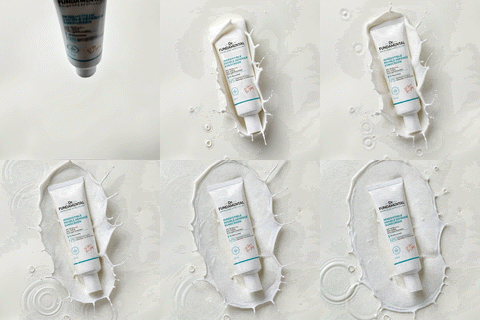
This is essentially the entire brief our N0.5 Irresistible Double Defence Sunscreen was built around. It's a 50ml fluid formula with SPF 50 PA++++ and 5% Niacinamide that's specifically designed for acne-prone and barrier-sensitive skin, and it's made to protect against sun damage while actively working to stop post-acne marks from getting darker. In their own testing, the brand found that the large majority of users felt the texture was genuinely lightweight with no sticky or greasy aftermath, and an even bigger majority confirmed there was no white cast at all and that it absorbed quickly. It's also non-comedogenic and dermatologically tested, so it's not throwing extra risk at skin that's already dealing with enough.
The Two-Finger Rule Nobody Follows (But Should)
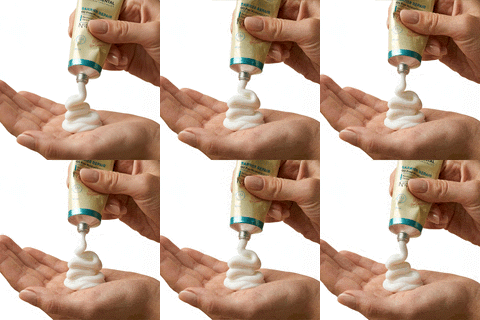
Here's an uncomfortable truth about most of us, myself included for years: we apply way less sunscreen than we think we do. Dermatologists widely recommend what's called the two-finger rule — squeezing out roughly two full finger-lengths of product to properly cover your face and neck. Most people apply maybe a quarter of that, which means even an SPF 50 sunscreen ends up performing more like an SPF 10 or 15 on your actual skin.
If you've ever felt like "sunscreen just doesn't work for my skin," there's a real chance the issue isn't the product, it's the quantity. A few habits that quietly sabotage your protection:
- Applying sunscreen as the very last rushed step before running out the door, skipping the 15-minute wait time it needs to actually settle in
- Skipping reapplication every two to three hours, especially if you're outdoors, sweating, or constantly wiping your face
- Using a pea-sized dab because "more feels heavy," when in reality the right formula won't feel heavy even at the correct amount
- Forgetting your neck, ears, and hairline, which age and pigment just as visibly as your face does
Getting this part right matters more than chasing a higher SPF number. An SPF 30 applied generously and reapplied properly will protect you better than an SPF 50 applied stingily once a day.
Building It Into a Routine That Actually Fades Marks
Sunscreen works best as the final move in a proper sequence, not as a standalone hero acting alone. Think of your morning skincare like a relay race — your cleanser clears the track, your serum and moisturizer do the active repair work, and sunscreen runs the last leg, locking everything in and standing guard for the rest of the day. Skipping it is like running three-quarters of the race and walking off the track before the finish line.
A simple AM sequence that pairs well with acne-prone, mark-fading goals looks something like this: cleanse to remove overnight oil and buildup, follow with a treatment serum targeting active breakouts or pigmentation, layer on a lightweight barrier-supporting moisturizer, and finish with your SPF. Apply it generously about fifteen minutes before you head out, and if you're someone who's outdoors a lot through the day, keep reapplying every two to three hours. The good news is that a properly formulated fluid sunscreen layers smoothly under makeup too, so this doesn't have to disrupt your beauty routine at all.
And for anyone wondering whether this still applies indoors — yes, unfortunately. UVA rays, the ones responsible for most pigmentation and ageing damage, pass straight through window glass. So that "indoor day at the laptop" isn't actually a sunscreen-free day, even though it feels like it should be.
A Quick Myth-Busting Round Before You Go
Since we're already deep into sister-to-sister honesty here, let's clear out a few myths that keep doing the rounds in group chats and beauty forums.
- "Oily skin doesn't need sunscreen because it already has natural protection" — sebum offers basically no UV protection, and skipping SPF on oily skin actually worsens both oiliness and pigmentation over time
- "Darker skin tones don't get sunburned, so sunscreen isn't urgent" — melanin offers some natural buffer but nowhere near enough, and pigmentation-prone skin is actually more vulnerable to visible dark spots, not less
- "If my sunscreen feels light, it's not working" — a well-formulated fluid or gel sunscreen can absorb fast and still deliver full SPF protection; heaviness was never proof of effectiveness, it was just outdated formulation
- "I don't need to reapply if I'm mostly indoors" — between window UVA exposure and blue light from screens contributing to oxidative stress, reapplication still matters more than we'd like to admit
Letting go of these myths is honestly half the battle. The other half is just picking a formula that doesn't make you want to skip it on a lazy Tuesday.
The Sister-to-Sister Bottom Line
If there's one thing I'd want you to walk away remembering, it's this: you can spend a small fortune on serums chasing brighter, clearer skin, but if sunscreen isn't a non-negotiable daily habit, you're working against yourself every single day you skip it. It's not the most exciting step, it doesn't come with a satisfying "glow" the moment you apply it, and it'll never trend on social media the way a new serum does. But it is, hands down, doing more for your acne marks long-term than almost anything else in your routine.
So if your current sunscreen is the reason you keep "forgetting" to apply it, that's worth fixing before you add one more product to your shelf. A lightweight, non-comedogenic, niacinamide-backed formula like the N0.5 Irresistible Double Defence Sunscreen is built exactly for this — protecting your skin and actively working against those marks getting darker, without the grease, the white cast, or the breakout guilt. Give it the same consistency you'd give a serum you actually love, and your skin will genuinely thank you for it months down the line.