




Picture your morning routine. You meticulously apply your skincare, layer on a generous amount of sunscreen, and step out the door. Within ten minutes of your daily office commute in Jaipur or navigating coastal humidity on a two-wheeler, your skin tells a different story. The air is heavy, the temperature is soaring, and you can feel a familiar layer of perspiration breaking through. By the time you reach your destination, that protective shield you carefully applied has dissolved into a white, sticky sheen tracking down your neck.
This is the reality of skin protection in the Indian subcontinent. Many individuals experience breakouts, stinging eyes, and unexpected tanning despite applying sunscreen every single morning. The problem usually does not lie with your application technique or the SPF rating on the bottle. The real culprit is a fundamental mismatch between standard skincare formulations and the intense, moisture-laden dynamics of the Indian climate.
When your sunscreen mixes with sweat, the uniform protective film fractures. This leaves patches of vulnerable skin exposed to aggressive ultraviolet radiation. To prevent this daily breakdown, it is essential to understand the science behind technical formulations—specifically, the structural differences between sweat-proof and water-resistant sunscreens.
Why Sunscreen Behaves Differently in Indian Weather
Standard global skincare formulations are rarely tested against a typical subcontinental summer. The performance of UV filters is deeply altered by the unique atmospheric conditions found across India.
- The Humidity Trap: In regions experiencing high humidity, moisture in the air prevents sweat from evaporating naturally off your skin. Instead, perspiration pools on the surface. This continuous moisture softens the sunscreen layer, causing standard emulsions to separate and slide off the face.
- The Dust and Pollution Synergy: Particulate matter suspended in urban air binds to oily, compromised sunscreen coatings. This combination clogs pores, oxidizes surface lipids, and generates localized free-radical damage that accelerates skin aging.
- Elevated UV Intensity: The Indian subcontinent receives direct, high-angle solar radiation for most of the year. When your protective skincare film fractures due to sweat, the high UV index penetrates these gaps instantly, leading to rapid hyperpigmentation and barrier degradation.
What Does Sweat-Proof Sunscreen Actually Mean?
The term "sweat-proof" is frequently utilized in sports marketing, but from a dermatological perspective, it refers to a formula specifically engineered to withstand heavy, active perspiration coming from inside the pores.
When you engage in outdoor sports activities or walk through a high-heat environment, your eccrine glands actively pump water, mineral salts, and lactic acid onto the skin's surface. A true sweat-resistant sunscreen utilizes specialized hydrophobic (water-repelling) polymers. These cross-link upon contact with the skin, creating a breathable, net-like matrix.
Instead of dissolving when sweat emerges from the pore, this advanced polymer network allows perspiration to pass through the microscopic gaps in the film without lifting the chemical or physical UV filters away. This ensures that even during high-intensity movement or peak summer heat, the core protective barrier remains structurally intact across your face.
What Is Water-Resistant Sunscreen?
Water-resistant sunscreen is formulated to protect the skin from external water immersion, such as swimming, wading through monsoon travel, or sudden downpours.
Regulatory bodies like the FDA standardize water resistance by testing formulas in water tanks. A label indicating "water-resistant for 80 minutes" means the product maintains its stated SPF value after 80 minutes of continuous water exposure. These formulations rely on heavy, oil-based emollients and specialized film-formers that create a dense barrier over the skin, effectively shedding external water droplets.
However, water resistance does not mean the product is permanently locked onto your skin. The mechanical friction of water currents, combined with towels used during drying, will physically remove the protective film. Consequently, immediate reapplication is mandatory after drying off, regardless of how many minutes are remaining on the product label.
Sweat-Proof vs Water-Resistant Sunscreen: Key Differences
While both categories aim to keep UV filters attached to your face, their engineering solves two entirely different challenges.
Consider a college student running between classes during peak heat. Their skin is producing active, warm sweat from within. A sweat-resistant formula is designed for this specific internal pressure, keeping the UV filters anchored around the pores.
On the other hand, if you are caught in a sudden monsoon downpour while traveling, an external sheet of water hits your skin. A water-resistant formula shines here by creating a surface barrier that causes external droplets to bead up and roll off without washing away the underlying protection.
For daily urban life—such as extended outdoor work, gym workouts, or attending long wedding functions in humid environments—sweat resistance is generally the more critical attribute. It prevents the product from stinging your eyes or pooling into white streaks during long, warm hours of wear.
Which Sunscreen Is Better for Indian Summers?
During a classic dry or oppressive Indian summer, your primary adversary is the sheer volume of sweat and sebum generated by your skin to cool itself down.
For general daily use, long commutes, and outdoor activities, look for formulas that feature light, adaptive polymer films. Heavy, purely water-resistant creams designed for cold-water swimming can feel like an occlusive mask in 42°C heat. They trap heat beneath the skin surface, paradoxically increasing sweat production and causing the product to slide off even faster.
Your summer choice should focus on featherlight textures that set down into a resilient, matte, or satin finish. This ensures the UV blockers stay anchored without suffocating your skin barrier during long, blistering days.
Which Sunscreen Is Better During Monsoon and Humidity?
Monsoon season brings a complex challenge: high relative humidity combined with unpredictable ambient water exposure. The air is saturated with moisture, meaning your sweat cannot evaporate, and sudden rain showers can drench your face instantly.
During this period, a hybrid approach yields the highest level of skin protection. A formula that provides verified water resistance ensures that walking through a damp, misty afternoon won’t dissolve your protection, while a matte, non-greasy base keeps your pores comfortable underneath the heavy humidity. This prevents the humid air from turning your visage into a sticky canvas for airborne pollutants.
How Different Skin Types Should Choose Sunscreen
No single sunscreen formula serves every face perfectly. To achieve consistent protection, you must align the product's vehicle base with your specific skin physiology.
Oily and Acne-Prone Skin
For individuals dealing with overactive sebaceous glands, the priority is avoiding heavy oils, waxes, and fatty acids that trigger congestion. The best sunscreen oily skin India requires is a fluid, ultra-light gel or an oil-free fluid that dries down to a clean, weightless matte finish. Look for oil-absorbing micro-particles or sebum-regulating additions that prevent your natural facial oils from breaking down the protective UV film throughout the day.
Combination Skin
Managing an oily T-zone alongside dry cheeks requires a careful balancing act. The best sunscreen for combination skin balances lightweight hydration with a non-greasy finish. Gel-cream hybrids work exceptionally well here; they deliver vital moisture to parched areas without overloading the forehead, nose, and chin, keeping the entire skin barrier uniform and fully protected.
Normal to Dry Skin
Dry skin types require nourishing formulations that lock in moisture, as environmental heat can rapidly deplete epidermal hydration. A rich, emollient lotion format that incorporates humectants and barrier-supportive lipids will keep the skin supple while preventing the flaking or tightness that often occurs after long hours in air-conditioned offices.
The Universal Ideal
For households or minimalist routines looking for a single, dependable solution, finding the best sunscreen for all skin types means seeking out modern, adaptive formulations. These innovative fluid textures hydrate dry zones gently while setting to a weightless, non-comedogenic finish that won't clog oily complexions. This versatile profile makes them an excellent, high-performance option as the best sunscreen for face care across changing seasonal conditions.
Common Sunscreen Mistakes That Reduce Protection
Even the most advanced formulation will fail to protect your skin if applied incorrectly. Avoid these four widespread application mistakes:
- Under-applying the Product: Applying a few sparse drops across your face deflates your actual protection. To achieve the stated SPF on the label, you must apply approximately two milligrams of product per square centimeter of skin—which equates to the classic two-finger line method for the face and neck.
- Neglecting Key Structural Zones: The tops of the ears, the back of the neck, the hairline, and the delicate skin around the eyelids are frequently skipped. These areas are highly susceptible to chronic UV damage and early signs of photoaging.
- Assuming a Single Morning Application Lasts All Day: Chemical and physical UV filters degrade after absorbing ambient light, and your skin's natural oils slowly dissolve the product layer. No matter how high the initial SPF rating, protection drops significantly after a few hours of exposure.
- Applying Sunscreen and Immediately Stepping Outdoors: Chemical filters require a brief window to form a cohesive, uniform protective film over the epidermis. Stepping directly into intense sunlight causes you to sweat before the formula sets, fracturing the defense system before it can even begin working.
Real-Life Case Study: Optimizing Sunscreen for the Daily Ride
To see the value of choosing the correct formulation, let's look at the daily routine of Ananya, a 26-year-old corporate professional based in New Delhi.
BEFORE OPTIMIZATION:
- Heavy, traditional emollient sunscreen applied once at 8:00 AM.
- 45-minute two-wheeler commute in peak humidity.
- RESULT: Sunscreen melted by 9:00 AM, leading to forehead tanning & clogged pores.
AFTER OPTIMIZATION:
- Switched to a sweat-resistant, fluid gel-cream formulation.
- Allowed 15 minutes to set before commuting; carried an easy touch-up option.
- RESULT: Intact UV film through the commute, no eye-stinging, even skin tone.
Ananya's experience demonstrates that protection relies entirely on film resilience. By switching from a heavy, traditional cream to an advanced, sweat-resistant fluid formulation, she maintained a reliable defensive barrier across her skin all day long.
Why Modern Sunscreens Need More Than Just SPF
The modern understanding of skin health shows that sun protection needs to go beyond simply filtering out UV rays. Today's skin faces a complex mix of environmental challenges.
Intense solar exposure creates systemic oxidative stress within the deeper layers of the skin, generating unstable free radicals that degrade collagen and compromise your moisture barrier. Furthermore, urban environments expose our skin to airborne pollutants and microscopic dust that stick to oily skincare films, triggering low-grade, chronic inflammation.
To counter these daily stressors, contemporary sunscreens must be multitasking formulations. By combining robust UV filters with soothing skin-barrier supports—such as botanical extracts, calming agents, and potent antioxidants—a modern formula does more than block sunlight. It actively calms environmental redness, neutralizes oxidative stress, and helps fortify your delicate skin barrier against the elements.
Why DR. Fundamental Irresistible Double Defence Sunscreen Fits Indian Weather Needs
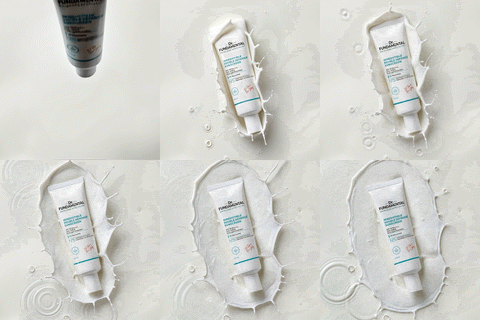
Engineered with a deep understanding of the subcontinental climate, DR. Fundamental Irresistible Double Defence Sunscreen offers a sophisticated solution to the daily challenges of heat, sweat, and humidity.
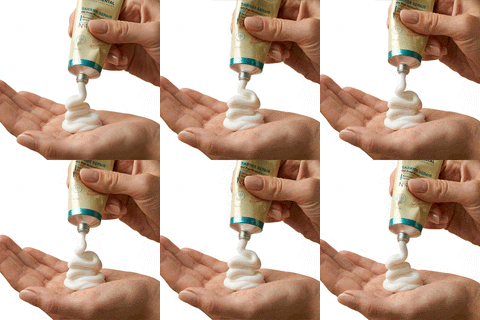
This advanced formulation avoids the heavy, suffocating feel of old-school sunblocks, utilizing an ultra-light fluid texture that glides effortlessly across the skin. It absorbs rapidly to create a resilient, breathable protective film that holds its ground against active perspiration and environmental moisture, making it an ideal companion for long commutes, outdoor tasks, and humid monsoon days.
The formula provides reliable broad-spectrum protection while remaining completely non-comedogenic, meaning it won't trap sebum or clog your pores in high temperatures. It sets down into a comfortable, seamless finish with absolutely zero white cast, serving beautifully across a wide range of skin tones.
Free from harsh synthetic fragrances and common irritants, it delivers a skin-friendly, reliable defense system that keeps your complexion calm, balanced, and fully protected through every shift in the weather.