



Let's be real. If you have oily skin, your relationship with sunscreen has probably been… complicated. You put it on, your face turns into a glazed doughnut by 11 AM, your foundation slides off by noon, and you swear to never do it again.
But here's the thing — skipping sunscreen when you have oily or acne-prone skin is like refusing to wear a seatbelt because it wrinkles your shirt. The damage happening underneath is far worse than a shiny T-zone.
The good news? The right light sunscreen for oily skin exists — and when it's combined with niacinamide, it does a lot more than just UV protection. Let's break it all down.
"Sunscreen is the one skincare step that dermatologists unanimously agree on. SPF 50 isn't optional — it's non-negotiable, especially for Indian skin under peak UV exposure."
Why Oily Skin Makes Sunscreen Shopping a Nightmare
Oily skin produces excess sebum — which is your skin's natural oil. It's not bad in itself (it protects your barrier and keeps skin supple), but too much of it + the wrong skincare products = clogged pores, breakouts, and that frustrating midday shine.
Most traditional sunscreens are formulated with heavy emollients and waxes that work beautifully for dry skin. For oily and acne-prone skin though? They sit on top of the skin, mix with sebum, clog pores, and trigger breakouts. That's why finding a genuinely acne-safe sunscreen that's also non-comedogenic is so important.
What oily skin actually needs is a liquid sunscreen or fluid-gel formula that:
- Absorbs quickly without a greasy residue
- Doesn't clog pores (non-comedogenic)
- Controls oil and shine — not amplifies it
- Delivers broad-spectrum SPF 50 without a white cast
- Ideally, multitasks with a skin-improving active ingredient
That last point brings us to niacinamide.
What Does Niacinamide Actually Do in a Sunscreen?
Niacinamide (a form of Vitamin B3) is one of those rare ingredients that does so much for so little drama. It's well-tolerated by almost all skin types, has strong research backing, and plays nicely with most other actives in your routine.
Here's what 5% niacinamide in a sunscreen formula brings to the table:
|
Oil Control - Regulates sebum production |
studies show niacinamide can reduce excess sebum secretion, which is exactly what oily skin types need from a daily sunscreen. |
|
Brightening - Reduces hyperpigmentation |
it inhibits the transfer of melanin to skin cells, helping fade post-acne dark spots and uneven skin tone over time. |
|
Barrier - Strengthens the skin barrier |
niacinamide supports ceramide production, which improves your skin's ability to retain moisture and resist environmental stressors. |
|
Anti-Inflammatory - Calms redness and irritation |
particularly useful for acne-prone skin where active breakouts and inflammation are common. |
In short, a niacinamide SPF 50 sunscreen isn't just protecting your skin — it's actively working to improve it while you go about your day. That's a win.
SPF 50 vs Lower SPF: Does the Number Matter for Oily Skin?
Short answer: yes, and here's why it's especially relevant for Indian skin tones and climate.
SPF 30 blocks around 97% of UVB rays. SPF 50 blocks approximately 98%. While that sounds like a small difference, consistent daily application under the Indian sun — combined with the reality that most people under-apply sunscreen — means SPF 50 provides a meaningful buffer.
PA++++ (the highest PA rating) indicates the highest available UVA protection. UVA rays are responsible for skin aging, hyperpigmentation, and they penetrate glass — so they're hitting you even when you're indoors near a window.
Read this too - Fluid Sunscreen for Face: Benefits of Lightweight Protection
Dermatologist Tip: For a sunscreen to deliver its labelled SPF, you need about 2 finger lengths of product for your face and neck. Most people use far less — which means even an SPF 50 might be performing more like an SPF 15 in practice. Apply generously, and re-apply every 2–3 hours if you're outdoors.
What to Look for in the Best Sunscreen for Oily Skin
Before you pick up any SPF 50 sunscreen, run it through this quick checklist:
- Non-comedogenic — formulated to not clog pores
- Fragrance-free — fragrances are a leading cause of contact irritation and acne flares
- Lightweight / fluid texture — gel or lotion-based, not heavy cream
- No white cast — especially important for medium to deeper Indian skin tones
- Dermatologically tested — particularly if your skin is reactive or post-treatment
- Layers well under makeup — because you shouldn't have to choose between SPF and your foundation
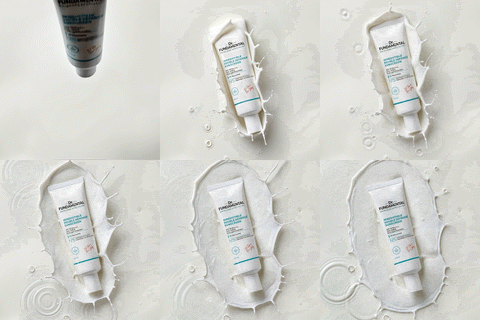
Here comes the N0.5 Irresistible Double Defence Sunscreen with 5% Niacinamide · SPF 50 PA++++ · 50ml · Fluid Sunscreen
- Non-Comedogenic
- Fragrance Free
- Dermatologically Tested
- Sensitive Skin Friendly
- No White Cast
78% - Found formula lightweight, non-sticky & non-greasy
97% - Saw zero white cast and fast absorption
84% - Saw improved texture and even skin tone
The Double Defence formula delivers two layers of protection in one step: broad-spectrum SPF 50 PA++++ UV protection, combined with 5% Niacinamide's active defence against pigmentation, inflammation, and environmental skin stressors. Formulated for dry to oily, acne-prone, and sensitive skin types — and designed to work as Step 5 in a complete barrier-repair routine.
Shop Now — ₹649
Key Ingredients That Make It Work for Oily Skin
|
5% Niacinamide Vitamin B3 at an effective concentration |
brightens, controls sebum, reduces inflammation, and fights free radical damage from UV and pollution. |
|
Hyaluronic Acid - Moisture without grease |
binds water to the skin to keep it hydrated and plump. Unlike oils, it provides lightweight hydration that doesn't trigger excess sebum. |
|
Kojic Acid - Targets dark spots |
a natural brightening agent that inhibits melanin production, working in synergy with niacinamide to fade post-acne hyperpigmentation. |
|
Ceramides - Barrier repair |
Ceramide NP, AP, and EOP help restore the skin's protective lipid layer, which oily and acne-prone skin often has compromised from over-cleansing or harsh actives. |
|
Zinc PCA - Oil control hero |
helps regulate sebum secretion at the skin level, contributing to a mattified, less shiny finish throughout the day. |
How to Use It: Getting the Most from Your SPF 50
- Apply 15 minutes before stepping outdoors — give it time to form a protective film
- Use 2 finger lengths of product for face and neck to reach the labelled SPF level
- Layer it as the last step of your AM routine — after cleanser, serum, and moisturiser
- Re-apply every 2–3 hours when outdoors, especially in direct sunlight
- Works well under makeup — apply it, let it absorb for a minute, then continue with your base
Note: If you're using other acne medications (prescription or OTC), check with your dermatologist before adding new actives to your routine. More ingredients don't always mean better results.
The Bottom Line
Yes — a niacinamide SPF 50 sunscreen genuinely works for oily and acne-prone skin, provided the formula is right. It's not just about UV protection anymore; the best sunscreens for oily skin in 2024 are multitasking formulas that actively improve your skin while protecting it.
The combination of broad-spectrum SPF 50 PA++++, 5% niacinamide, Hyaluronic Acid, Ceramides, and Zinc PCA in a lightweight fluid formula is about as close to a perfect oily-skin sunscreen as it gets. It won't eliminate breakouts overnight (nothing honest will promise you that), but consistent daily use — alongside a solid skincare routine — can make a visible difference in oil control, skin tone, and overall skin health.
So the real question isn't whether to wear sunscreen. It's just a matter of finding the one that doesn't make you regret it.
Frequently Asked Questions
1. Can I use niacinamide sunscreen daily if I have acne-prone skin?
Yes. Niacinamide is one of the most well-tolerated skincare actives and is specifically beneficial for acne-prone skin — it helps reduce inflammation, regulate sebum, and improve barrier function. A non-comedogenic, fragrance-free niacinamide SPF 50 sunscreen is suitable for daily AM use.
2. Is SPF 50 really necessary, or will SPF 30 do?
Both provide solid protection, but SPF 50 offers a meaningful upgrade — particularly in the Indian climate with its high UV index. SPF 50 PA++++ is widely recommended for daily use, especially if you're spending time outdoors or using actives like retinoids or exfoliating acids that can increase photosensitivity.
3. Does this sunscreen leave a white cast on darker Indian skin tones?
The Dr. Fundamental Double Defence Sunscreen is formulated as a fluid, not a thick cream, and 97% of users in clinical testing reported zero white cast with fast absorption. It's designed to be invisible on all Indian skin tones.
4. Can I skip moisturiser if I use this sunscreen?
The sunscreen contains Hyaluronic Acid and Ceramides, which do provide some hydration and barrier support. However, for best results — especially if you're using actives like AHAs, BHAs, or retinoids — applying a lightweight moisturiser before your SPF is still the recommended approach.
5. Is liquid sunscreen better than cream sunscreen for oily skin?
Generally, yes. Liquid and gel-fluid sunscreens absorb faster, sit lighter on the skin, and are less likely to clog pores compared to thicker cream formulas. For oily and acne-prone skin, a fluid or gel-based SPF 50 sunscreen is almost always the better choice.
6. How often should I reapply sunscreen?
Every 2–3 hours when you're outdoors in direct sunlight. Sunscreen breaks down with UV exposure and sweat — especially in the Indian summer. If you're indoors most of the day with limited sun exposure, a morning application is typically sufficient, but reapplication is always the safe call.
7. Can men with oily skin use this sunscreen?
Absolutely. The lightweight, matte-finish, non-greasy formula works equally well for men. It layers under or without makeup and controls shine without making skin feel dry or tight.