


You finally cleared the breakout. The pimple dried up, the swelling went down — but now you're staring at a stubborn dark patch that refuses to leave. Sound familiar? You're not alone, and more importantly, you're not doing anything wrong. The problem isn't your acne anymore. It's what the acne left behind.
This is where most people hit a wall — they keep using the same products that cleared their acne and wonder why those flat brown or reddish marks aren't fading. The truth is, post-acne skin has completely different needs, and relying on salicylic acid alone is like using a broom to mop a floor. It's not the wrong tool; it's just not the right one for this job. What your skin actually needs at this stage is a targeted serum for acne scars that works on pigmentation correction — not just pore cleansing.
What Are Those Marks, Really?
Before we talk about solutions, let's understand what we're dealing with.
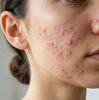
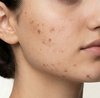
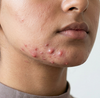
After a pimple heals, the inflammation it caused leaves behind a trail of confusion in your skin's pigment-producing cells (melanocytes). These cells, already on high alert from the breakout, go into overdrive and dump excess melanin into the surrounding tissue. The result? A flat, discoloured patch — medically called post-inflammatory hyperpigmentation (PIH).
PIH appears as flat brown or black spots exactly where the inflammation occurred. They form when inflammation triggers excess melanin — the skin's natural pigment — leading to darker patches. Picking or squeezing acne worsens this process, causing even deeper pigmentation, and sun exposure can darken healing spots further.
This is very different from actual acne scarring. True acne scars represent actual changes to the architecture of the skin — physical depressions or raised texture in the dermis. They are not just discolouration, and topical skincare has limited impact on these structural changes. Post-acne marks, however, are purely a pigmentation issue. No texture. No depth. Just colour — and that's actually good news, because the right ingredients can genuinely fade them.
Why Salicylic Acid Isn't Enough Anymore
Salicylic acid is a legendary ingredient. It's oil-soluble, it penetrates deep into pores, and it's your go-to weapon during active breakouts. But once the acne is gone, its role becomes limited.
Salicylic acid may help hasten the fading of dark spots through exfoliation of pigmented skin and calming of inflammation — but the changes are usually slow and minor, and it cannot fully remove acne marks or alter skin texture in a meaningful way.
Salicylic acid can help prevent new spots while fading existing ones — but for stubborn pigmentation that doesn't respond to other treatments, you need to graduate to targeted actives that directly interrupt melanin production at the source.
In short: salicylic acid fights the cause of marks. It doesn't treat the marks themselves. Once your acne is under control, your skin needs a completely different class of ingredients.
The Two Ingredients Your Post-Acne Skin Is Waiting For
1. Tranexamic Acid — The Pigment Interceptor
Tranexamic acid (TXA) has quickly become one of the most talked-about ingredients in dermatology for a reason. TXA reduces plasmin-linked inflammatory amplification, prevents the post-acne "red-to-brown" transition, and interrupts pigment escalation after micro-injury — making it central to any serious post-acne treatment plan.
TXA improves skin colour by inhibiting pigmentation and attenuating skin surface inflammation — both of which contribute to post-acne marks and post-inflammatory hyperpigmentation. A 12-week clinical study found significant reduction in PIH severity from week 4 onwards, with continuous cumulative improvement through week 12.
What makes it special for Indian skin tones? Medium to deeper skin tones experience more pronounced PIH from acne, because the higher density of active melanocytes means any acne-triggered inflammatory response produces a stronger and longer-lasting pigmentation response. TXA works precisely at this point — blocking the signal before the colour sets in deeper.
2. Niacinamide — The Brightening Regulator
Niacinamide (Vitamin B3) is the ingredient that bridges the gap between fighting acne and fading its aftermath. At 10%, it's a multitasking powerhouse that addresses multiple concerns simultaneously.
Niacinamide inhibits the transfer of melanosomes after they have been produced — targeting PIH after the pigment is already formed. This makes it beautifully complementary to tranexamic acid, which works upstream to prevent pigment signals.
Beyond fading marks, niacinamide also regulates sebum production, visibly minimises pores, and strengthens the skin barrier — which is critical because without barrier repair, skin can re-trigger pigmentation too easily, and pigmentation recurrence happens less when the barrier is stable than when you simply load more actives.
The Science of Synergy: Why the Combination Works Better
Using TXA and niacinamide together isn't just logical — it's clinically backed.
|
Ingredient |
What It Does |
Best For |
|
Tranexamic Acid (4%) |
Blocks plasmin → stops melanin trigger signal |
Fresh post-acne marks, PIH prevention |
|
Niacinamide (10%) |
Stops melanosome transfer → prevents colour from spreading |
Existing dark spots, uneven tone |
|
Together |
Dual-pathway pigmentation control |
Stubborn PIH across all skin tones |
Pairing tranexamic acid with niacinamide has been shown to significantly improve post-acne marks and discolouration — because they target PIH from two different biological mechanisms rather than one.
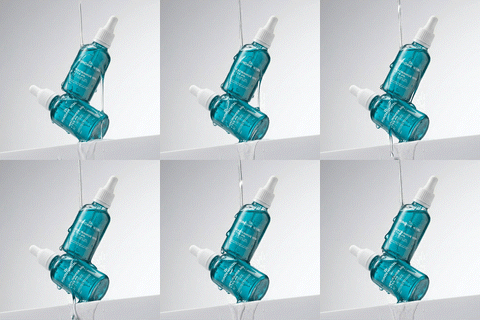
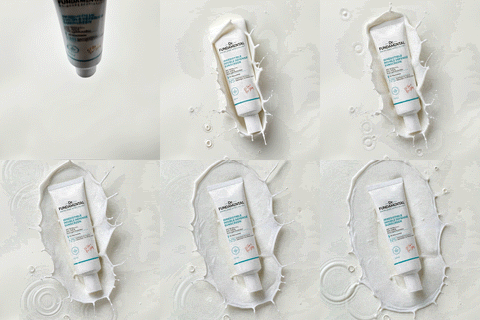
This is exactly the philosophy behind DR. Fundamental's 4% Tranexamic Acid + 10% Niacinamide Clarifying Face Serum — a formulation built for exactly this post-acne phase where your skin needs targeted pigmentation correction, not just pore care.
How Post-Acne Marks Form (And How to Stop Them at Every Stage)
Understanding the timeline helps you act at the right moment.
Stage 1 — Inflammation (during breakout): The immune response is triggered. Melanocytes sense inflammation and begin overproducing melanin.
Stage 2 — Healing (days 3–7): The pimple dries. But the melanin already deposited remains in the upper layers of skin.
Stage 3 — Mark formation (week 1–4): If sun exposure continues without SPF, or if no targeted treatment is used, the mark deepens in colour and becomes harder to fade.
Stage 4 — Pigment correction (week 4–12+): This is where serum for acne scars and brightening activities like tranexamic acid and niacinamide do their heaviest lifting — visibly fading flat marks with consistent use.
The earlier you introduce a targeted blemish serum in this cycle, the shorter the fading timeline. You don't need to wait for acne to clear before treating acne marks — using a TXA-based treatment during the healing phase can actively prevent the pigmentation from setting in deeply.
Your Post-Acne Skincare Routine (Simplified)
Here's how to build a routine that actually works for marks, not just breakouts:
Morning Routine
- Gentle, non-stripping face wash
- DR. Fundamental 4% Tranexamic Acid + 10% Niacinamide Clarifying Face Serum (acts as your serum for pimple marks and daily brightening step)
- Lightweight moisturiser
- Broad-spectrum SPF 50+ (non-negotiable — skipping this undoes all your serum work)
Evening Routine
- Double cleanse if you wear SPF/makeup
- The same clarifying serum — TXA and niacinamide work around the clock
- Nourishing moisturiser to support barrier repair overnight
One important note: tranexamic acid works well with other active ingredients — it won't clash with vitamin C in the morning or retinol at night. So if you're already using other actives, you don't need to rebuild your entire routine.
What About Blackheads — Does This Serum Help?
Yes — and here's why. Serum for blackheads is a common search because blackheads, much like post-acne PIH, are often misunderstood as a "cleaning" problem. They're actually a congestion and oxidation problem.
Niacinamide at 10% regulates sebum production and visibly tightens the appearance of pores, reducing the environment where blackheads form. When paired with TXA's anti-inflammatory action, it reduces the post-blackhead redness and dark spots left after extraction — making this serum effective at the aftermath of blackheads, not just active acne.
Who Is This Serum For?
The DR. Fundamental 4% Tranexamic Acid + 10% Niacinamide Clarifying Face Serum works best for people who:
- Have cleared their acne but are dealing with lingering dark marks
- Have medium to deep skin tones prone to PIH
- Want a serum for acne scars that is non-irritating and suitable for daily use
- Are looking for a single, effective blemish serum rather than stacking five products
- Deal with oily or combination skin with visible pores and uneven texture
Clinical research shows that 5–10% niacinamide concentrations are optimal for reducing scars and discolouration, with visible improvement in skin texture and tone typically appearing within 6–8 weeks of consistent daily use.
What Results Should You Realistically Expect?
Honesty matters here. This isn't a three-day fix. Post-acne pigmentation took weeks to develop — it needs weeks to fade.
- Weeks 1–2: Skin feels more balanced, oiliness reduces, skin texture begins to smooth
- Weeks 4–6: Visible lightening of newer marks, skin tone appears more even
- Weeks 8–12: Significant fading of older, stubborn PIH with consistent use and daily SPF
Expect gradual results over 8 to 12 weeks, with fuller fading by six months for deeper marks. The key variable is sun protection. Without it, every serum on the market will underperform.
Final Word: Treat the Phase, Not Just the Problem
Most skincare routines are built around one problem — active acne. But your skin goes through phases, and each phase has different needs. Post-acne skin isn't broken or damaged — it's just in recovery, and recovery requires tools designed for recovery.
Salicylic acid cleared the battlefield. Now it's time to rebuild what's left behind.
With the right serum for acne scars, powered by 4% Tranexamic Acid and 10% Niacinamide, you're not just treating marks — you're correcting the process that creates them, giving your skin the environment to actually look the way it should: clear, even, and calm.