



If you have been dealing with acne for a while, you already know the drill — a pimple shows up, you treat it, it fades, but then it leaves behind a dark spot. And just when that mark starts to lighten, a fresh breakout appears right next to it. The cycle feels endless, and honestly, it is — unless you understand why it keeps repeating.
Most acne-focused conversations zero in on just one problem: the pimple. But what actually keeps your skin stuck in this frustrating loop is not one villain. It is three, working in a triangle. Excess oil, active inflammation, and post-acne pigmentation are not separate issues. They are deeply connected, and treating only one without addressing the other two is why so many people never fully escape acne's grip.
This article breaks that triangle down — and explains how the right anti acne serum can interrupt all three sides of it at the same time.
Understanding the Acne Triangle
Corner 1 — Excess Oil (Sebum Overproduction)
Sebum is not inherently bad. Your skin needs a certain amount of oil to stay healthy and protected. The problem begins when the sebaceous glands go into overdrive, producing far more oil than the skin actually needs.
This overproduction, driven by hormones, heat, humidity, and stress, creates a perfect breeding ground for acne. The excess oil mixes with dead skin cells and clogs pores. Once a pore is blocked, bacteria thrive in the oxygen-free environment inside — and a breakout is born.
What most people miss here is that over-drying the skin in an attempt to control oil almost always backfires. When the skin feels stripped, it compensates by producing even more sebum. This is why harsh, alcohol-heavy products often make oily skin worse over time.
Corner 2 — Inflammation: The Real Damage Maker
When bacteria colonise a clogged pore, the immune system responds. It sends inflammatory signals to the site, causing the redness, swelling, and pain you associate with a painful, active pimple. This is your body trying to contain an infection — but that response comes at a cost.
Inflammation is also what causes the deeper damage beneath the skin's surface. When the inflammatory response is strong or prolonged, it disrupts surrounding tissue, breaks down collagen, and triggers the melanocytes (pigment-producing cells) to go into overdrive. In simple terms: the more inflamed a breakout, the darker and more stubborn the mark it leaves behind.
This is why calming inflammation is not just about making a pimple less angry-looking. It is about reducing the collateral damage that leads to the third corner of the triangle.
Corner 3 — Post-Acne Pigmentation (PIH)
Post-inflammatory hyperpigmentation — or what most of us simply call acne marks — is the skin's protective response to inflammation. When melanocytes are disturbed, they release excess melanin into the surrounding tissue. The result is a flat, dark patch that lingers long after the actual pimple has healed.
For Indian skin tones, this pigmentation tends to be deeper, more persistent, and significantly more difficult to fade than it is for lighter skin types. The combination of higher baseline melanin levels and India's intense UV exposure means that without targeted treatment, these marks can stick around for months or even years.
And here's the part that keeps the cycle running: as long as new breakouts keep occurring, new inflammation keeps happening, and new pigmentation keeps forming — often before the old marks have even had a chance to fade.
Why Most Products Only Solve One Corner
Walk into any pharmacy and you will find products positioned as either acne treatments or brightening treatments. Very few are designed to genuinely address both simultaneously — and almost none also regulate oil production at the same time.
Single-ingredient solutions often create their own problems. Strong exfoliants used without support can strip the barrier, triggering rebound oiliness and making the skin more reactive. Brightening agents that are not anti-inflammatory can frustratingly lighten the surface while new inflammation forms underneath. Oil-controlling products that dry out the skin without any barrier repair leave the skin more sensitive and prone to irritation.
The reason the acne triangle is such a useful framework is that it makes this limitation visible. You are not going to break the cycle by targeting one corner. You need actives that speak to all three.
The Ingredient Logic: What Actually Works on All Three Corners
Here is what the science consistently supports for multi-angle acne management:
|
Skin Concern |
Key Ingredient |
What It Does |
|
Excess oil / clogged pores |
Salicylic Acid (BHA) |
Oil-soluble, penetrates deep into pores, dissolves the dead cell and sebum buildup |
|
Active inflammation / redness |
Azelaic Acid |
Calms inflammatory response, has antibacterial action without disrupting microbiome balance |
|
Post-acne pigmentation |
Niacinamide + Azelaic Acid |
Inhibits melanin transfer, brightens marks, evens skin tone |
|
Barrier damage (from all three) |
Niacinamide |
Strengthens ceramide production, maintains hydration, reduces sensitivity |
The reason this combination works where single ingredients fall short is that each active is addressing a different mechanism — simultaneously. Salicylic Acid clears the congestion causing future breakouts. Azelaic Acid calms what is already inflamed and prevents further pigmentation from forming. Niacinamide fades existing marks while rebuilding the skin's resilience.
Salicylic Acid: The Pore Expert
Salicylic Acid is a beta-hydroxy acid (BHA), which means it is oil-soluble. Unlike water-based exfoliants that work on the skin's surface, salicylic acid can actually penetrate into the pore lining and dissolve the oil and debris that clog them from the inside out.
At 2%, it is effective enough to keep pores clear and prevent comedones (blackheads and whiteheads) from forming, without over-exfoliating or disrupting the skin's natural protective layer. Encapsulated formulations deliver this even more gently — releasing slowly into the skin rather than hitting all at once, which significantly reduces the risk of dryness or irritation.
Azelaic Acid: The Underrated Powerhouse
Azelaic Acid does not get nearly the attention it deserves. Naturally derived from grains, it works at multiple levels relevant to the acne triangle.
It has antibacterial properties — specifically targeting Cutibacterium acnes, the bacteria responsible for inflammatory acne — without being as harsh or disruptive as benzoyl peroxide. It is also a tyrosinase inhibitor, meaning it interferes with the enzyme that drives melanin production. This makes it directly effective at preventing new pigmentation from forming after a breakout.
Crucially, Azelaic Acid is one of the few actives that is gentle enough for sensitive and reactive skin, safe to use during the day, and beneficial for both hormonal acne and fungal acne. At 5%, it delivers meaningful results without the peeling or sensitivity associated with stronger exfoliants.
Niacinamide: The Skin Barrier's Best Friend
Niacinamide (Vitamin B3) has earned its reputation as one of the most versatile skincare actives available. For acne-prone skin specifically, it pulls off something quite remarkable — it addresses multiple concerns without causing irritation or compromising the skin barrier.
It regulates sebum production at the source, reducing how much oil the sebaceous glands produce in the first place. It inhibits the transfer of melanin to the skin's surface, meaning it actively fades existing pigmentation. And it strengthens the skin's barrier by boosting ceramide production, which means the skin becomes less reactive, less red, and more resilient over time.
For Indian skin, where serum for acne marks is among the most searched skincare terms, niacinamide's ability to fade post-inflammatory pigmentation without sun sensitivity makes it particularly well-suited.
The DR. Fundamental Glass Skin Anti Acne Serum: Built for the Triangle
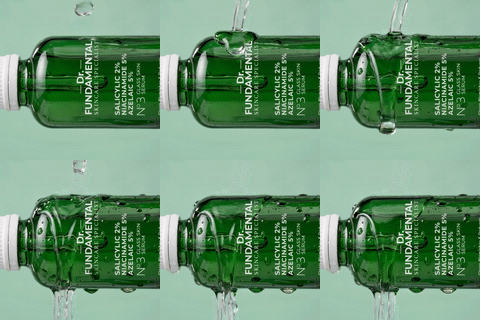
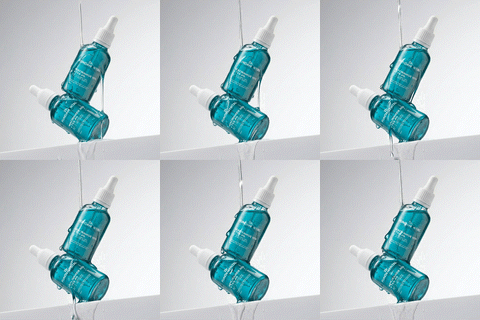
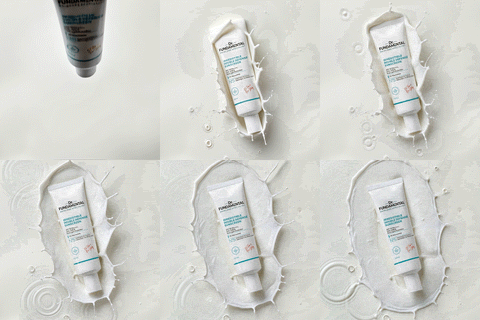
The DR. Fundamental N0.2 Glass Skin Anti Acne Serum was formulated around exactly this three-corner logic — combining 2% Salicylic Acid, 5% Niacinamide, and 5% Azelaic Acid in a single lightweight formula designed for acne-prone, oily, and combination skin.
It functions as a comprehensive serum for clear skin by clearing active congestion with Salicylic Acid, calming inflammation and bacteria with Azelaic Acid, and fading marks while reinforcing barrier health with Niacinamide — all without fragrance, without comedogenic ingredients, and with a texture light enough for Indian humidity.
Clinical data from the brand shows that 93% of users found the serum effective in reducing acne and inflammation, while 89% noticed visible improvement in marks, pigmentation, and uneven tone. These numbers reflect what the formula was designed to do: work on all three corners, not just one.
The serum also includes Hyaluronic Acid to maintain hydration while actives work, and uses encapsulated Salicylic Acid to ensure effective yet gentle delivery — making it suitable even for those who have previously found BHA-based products too drying or irritating.
It is non-comedogenic, fragrance-free, dermatologically tested, and safe for sensitive skin — making it a reliable daily serum for acne scars, active breakouts, blackheads, and uneven skin tone all in one step.
How to Use It for Best Results
The serum fits naturally into both morning and evening routines:
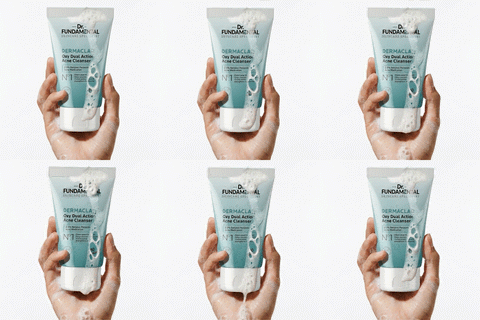
- Start with a gentle, pore-clearing cleanser (like the DR. Fundamental Dermaclar Oxy Acne Cleanser)
- Apply 2–3 drops of the serum to clean, dry skin and pat gently
- Follow with a lightweight, oil-free moisturiser to lock in hydration
- In the morning, always finish with SPF 30 or higher — pigmentation treatment without sun protection is significantly less effective
For those new to active ingredients, starting with once-daily use (preferably at night) and gradually moving to twice daily gives the skin time to adjust without overwhelming.
Avoid layering with retinol, AHA peels, or other exfoliating acids unless guided by a dermatologist.
The Bigger Picture: Breaking the Cycle for Good
Acne management is not just about clearing what you can see right now. It is about interrupting the pattern — the oil that clogs, the bacteria that inflame, the melanin that leaves its mark — before it starts again.
A well-formulated anti acne serum that addresses all three points of the triangle simultaneously gives your skin something it rarely gets from conventional acne products: a genuine chance to reset. Fewer new breakouts mean less new inflammation, which means less new pigmentation forming while the existing marks fade.
That is what the acne triangle framework ultimately teaches: treat the system, not the symptom.