





Picture this. It's 10 AM in May. You've already washed your face twice. Your T-zone has decided it wants to be its own separate oil refinery. Your foundation has moved three neighbourhoods to the left. And somewhere in your cabinet, you're staring at two cleansers wondering — am I even using the right one?
Sis, I've been there. We all have. Indian summers are not playing games. The heat, the humidity, the dust, the sweat, and oh — the absolute betrayal of your own skin. Choosing the wrong cleanser during this time doesn't just leave you with a "not-so-clean" face. It can throw your whole skin barrier into chaos.
So today, we are settling this once and for all — gel cleanser versus foam cleanser. Which one is actually right for you, your oily skin, and the very specific hell that is peak Indian summer?
First, Let's Understand What These Two Even Are
Before we pick a side, let's give both their fair moments.
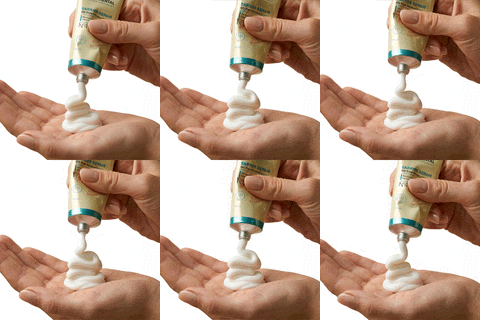
A foam cleanser is exactly what it sounds like — it lathers up into a rich, bubbly foam when you mix it with water. The reason it foams is because it contains surfactants, which are ingredients that reduce surface tension and help oil and water mix. The classic culprit is Sodium Lauryl Sulfate (SLS). That satisfying squeaky-clean feeling you get right after using one? That's the foam cleanser removing everything — the oil, the dirt, and in many cases, the moisture your skin actually needed to keep.
A gel based cleanser, on the other hand, is water-based, lightweight, and clear or translucent in texture. It doesn't foam dramatically, but it cleanses effectively by dissolving surface oil and impurities through milder emulsification. It's typically gentler on the skin barrier, hydrates while it cleans, and leaves your face feeling clean without that tight, stripped-of-everything sensation. Think of it as the calm, efficient friend who gets the job done quietly while the foam cleanser is the one making noise at a party.
What Actually Happens to Oily Skin When You Over-Cleanse
Here's the part that trips most of us up, especially in summer. You see shine on your face, you think more cleansing = less oil. So you reach for the most aggressively foaming face wash you can find. It lathers gloriously. Your face feels so clean it almost squeaks. And then two hours later — you're oilier than before.
That's not a coincidence. That's your skin panicking.
When you strip your skin of its natural oils using harsh surfactants (especially with high-foaming cleansers), your sebaceous glands interpret this as an emergency. They respond by producing even more oil to compensate. The result is a very real cycle where you keep cleansing harder, your skin keeps producing more oil, and nothing ever feels balanced. This is especially true for oily skin during Indian summers, when your skin is already working overtime because of the heat and humidity.
The squeaky-clean feeling is not a goal. It's a red flag.
The Indian Summer Skin Problem Is Actually Unique
Let's talk about our skin specifically, because not all skincare advice written for Western audiences applies to us. Indian skin tends to have more active sebaceous glands, and our tropical climate means higher levels of ambient heat, humidity, dust, and pollution. Add to this the way our skin can swing between extremely oily in summer and borderline dehydrated in AC-cooled environments, and you realise our skin has a very specific set of needs.
The challenge is this: our skin needs deep cleansing because of pollution and sebum buildup, but it also cannot afford to have its moisture barrier repeatedly compromised. Most standard foam cleansers attack both — they remove the grime but also disrupt the barrier, leaving skin vulnerable to more breakouts, more inflammation, and more reactivity to heat.
A mild cleanser for oily skin — specifically a gel cleanser for oily skin — is formulated to address exactly this balance. It removes the excess oil and environmental debris that builds up during a hot, sweaty Indian day, without stripping the protective lipid layer your skin relies on to stay healthy.
Gel Cleanser vs Foam Cleanser: Let's Actually Compare
Now that we understand the context, here's a proper breakdown so you can make an informed decision.
Foam Cleanser:
- Produces a rich lather through high-foaming surfactants
- Highly effective at cutting through heavy makeup, SPF, and excess sebum
- Can leave skin feeling tight or dry if the formula uses harsh surfactants
- Tends to disrupt the skin's natural pH balance with repeated use
- Best suited as an evening, second-step cleanser when there's genuine buildup from the day
Gel Based Cleanser:
- Clear or translucent, water-based texture with mild surfactants
- Cleanses effectively without over-stripping or disrupting the skin barrier
- Provides a cooling, refreshing sensation that makes it ideal for hot and humid weather
- Maintains the skin's natural moisture balance while removing oil and impurities
- Works well for morning cleansing and for those with acne-prone or sensitised skin
- Non-comedogenic formulas help prevent pore clogging without harsh drying
The takeaway? Both can work — but for Indian summers, and for skin dealing with active oiliness and acne, a gel cleanser for oily skin wins the morning round without question. It's the smarter, kinder choice for skin that's already stressed by heat and humidity.
Why a Gel Cleanser Makes More Sense for Acne-Prone Skin in Summer
Acne-prone skin is almost always inflamed skin. When you layer heat, sweat, and a stripping foam cleanser on already irritated skin, you are essentially adding fuel to a fire. The inflammation worsens, the barrier breaks down further, and bacteria thrive in the compromised environment.
A gel based cleanser — especially one that's formulated with active ingredients rather than just cleaning agents — does something different. It cleanses, yes. But it also delivers the actives your skin actually needs to address the root cause of the breakouts, not just the surface oil.
This is where the choice of what's in your cleanser matters as much as the texture itself. Ingredients like Benzoyl Peroxide, Salicylic Acid, Panthenol, and Hyaluronic Acid inside a gel cleanser mean your first step of the day is already doing therapeutic work — not just washing your face.
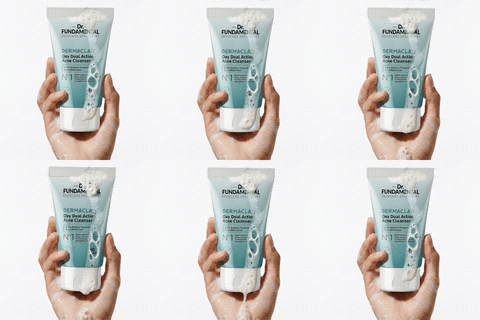
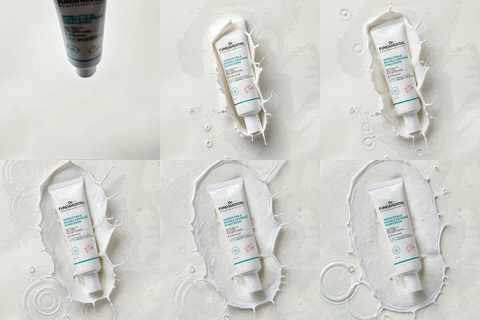
Introducing Dr. Fundamental Dermaclar Oxy Acne Cleanser — The One That Actually Does Both
Okay, real talk. If I were to design a cleanser for oily skin that works specifically in an Indian summer context, it would look a lot like the Dr. Fundamental Dermaclar Oxy Acne Cleanser.
This is a gel based cleanser with 2.5% Encapsulated Benzoyl Peroxide — and yes, the "encapsulated" part matters. Regular Benzoyl Peroxide can be intense on skin, causing dryness, peeling, and redness. Encapsulated Benzoyl Peroxide releases slowly and precisely on skin contact, which means you get the full antibacterial action without the harshness that usually comes with it. It kills acne-causing bacteria, clinically shown to eliminate 93% of them within just one minute of use.
But what makes it different from a typical mild cleanser for oily skin is that it doesn't stop at just cleaning. The formula also includes:
- Salicylic Acid to work through congestion inside the pore
- Hyaluronic Acid to prevent the skin from drying out while the actives work
- Panthenol to soothe and strengthen the skin barrier
- Allantoin to calm any irritation or redness
It's fragrance-free, non-comedogenic, and dermatologically tested for sensitive skin. That last bit is important — because the biggest concern most people have with an active-based acne cleanser is whether it'll make sensitised summer skin worse. Dermaclar is formulated to answer exactly that concern.
In clinical results, 97% of users reported a visible reduction in acne and fewer new breakouts. And 84% said the formula felt gentle and non-drying — which, as someone who has used drying acne face washes before, is not a small thing.
How to Use Your Gel Cleanser in Summer the Right Way
Having the right product matters, but so does how you use it. A lot of people shortchange their cleanser by washing it off in five seconds.
Here's how to actually get results from a gel cleanser for oily skin like Dermaclar:
- Dampen your face with lukewarm water (not hot — hot water strips the barrier further in summer heat)
- Apply a small amount to your fingertips and massage gently onto the face in circular motions
- Leave it on for about 2 minutes — this is when the actives are actually doing their work
- Rinse thoroughly and follow immediately with a lightweight moisturiser
- In the morning, always layer SPF on top, no skipping
If your skin is new to Benzoyl Peroxide, start with once-daily use in the evening and build up tolerance before moving to twice daily.
What About Foam Cleansers — Should You Throw Them Out Entirely?
No, not necessarily. Foam cleansers do have their place. If you wear heavy SPF, makeup, or sunscreen throughout the day, a mild cleanser for oily skin in gel form may not fully break down those products by itself. In that case, a double-cleanse approach makes sense — use an oil-based or balm cleanser as the first step to melt down SPF and makeup, and follow with your gel cleanser as the second step to treat and cleanse the pore.
The problem isn't foam cleansers in theory. The problem is using a high-SLS foaming face wash as your only cleanser, twice a day, every day, especially during a season when your skin is already stressed. That's the routine that causes damage over time.
If you love the feeling of foam, look for sulphate-free formulas with gentle surfactants. But for daily use, morning and night, a well-formulated gel based cleanser with active ingredients is what oily, acne-prone skin in an Indian summer genuinely needs.
The Skin Barrier Conversation We Need to Have
One last thing before we wrap, because this doesn't get talked about enough. Many people with oily skin spend years unknowingly damaging their skin barrier through over-cleansing, harsh products, and the assumption that more product = more results.
A compromised barrier doesn't just cause dryness. On oily skin, a damaged barrier can look like chronic breakouts that don't respond to treatment, redness that won't go away, and an oiliness that seems to get worse the more you try to control it. That's not your skin type being difficult — that's your barrier screaming for help.
This is exactly why cleanser for oily skin formulations have moved away from stripping toward treating. The best mild cleanser for oily skin in 2025 is one that brings therapeutic actives to the skin while keeping the barrier intact. Not one that makes you feel like you scrubbed your face with dish soap.
Quick Summer Skincare Routine for Oily and Acne-Prone Skin
Morning:
Gel cleanser → Lightweight serum (Niacinamide or Tranexamic Acid work well in Indian summers) → Oil-free moisturiser → SPF 50 PA++++
Night:
Oil cleanser to remove SPF and pollution buildup (if wearing SPF or makeup) → Gel cleanser with actives → Serum → Moisturiser
Keep it simple. Keep it consistent. And please, put down the aggressive foam cleanser as your morning routine. Your skin deserves better on a 42-degree day.
The Final Verdict
Okay, so let's just say it plainly — if you have oily, acne-prone skin and you're living through an Indian summer, a gel based cleanser is your best friend and a harsh foam cleanser is the frenemy you need to break up with.
Foam cleansers aren't evil. But used daily on already-stressed summer skin, they strip more than they should, trigger more oil than you started with, and leave your barrier worse off than before. That squeaky-clean feeling was never the goal — it was always the warning sign.
A gel cleanser for oily skin gives you everything you actually need. It cleans without over-stripping, keeps your barrier intact, and when it's formulated with the right actives, it treats acne at the root instead of just cleaning the surface. That's the difference between a face wash and a real cleanser for oily skin.
If you're looking for a place to start, the Dr. Fundamental Dermaclar Oxy Acne Cleanser does exactly this — a mild cleanser for oily skin that's also genuinely therapeutic, fragrance-free, and built specifically for skin that needs results without the damage.
Wash smart. Your skin will thank you by lunchtime.