




If you have lived through an Indian summer with oily, acne-prone skin, you already know the struggle. By 10 AM, your face is shining. By afternoon, fresh breakouts are forming where there were none yesterday. And somewhere in the middle of all that chaos, you are standing in front of a shelf full of cleansers, trying to figure out which one is actually going to help — and which one is quietly making things worse.
The most common debate? Gel based cleanser vs foam cleanser.
Both promise clear skin. Both claim to fight oil. But only one is actually doing the job for most Indian skin types, especially during the summer months. This article breaks down exactly how each cleanser works, why the wrong one can trigger more breakouts, and what the science says about which formula is better suited for the Indian climate.
Let us get into it.
Understanding What Happens to Your Skin in Indian Summers
Before picking a cleanser, it helps to understand what Indian summer conditions actually do to your skin.
India's summer climate — particularly in cities like Delhi, Jaipur, Mumbai, Chennai, and Hyderabad — combines high temperatures, intense UV radiation, and high humidity. This combination pushes sebaceous glands into overdrive. Your skin produces more oil to compensate for heat-related water loss, sweat mixes with that oil and sits on the surface, pores get congested, and the result is a near-perfect environment for Cutibacterium acnes (the bacteria responsible for inflammatory acne) to thrive.
On top of that, most people are applying sunscreen daily, which adds another layer of product to cleanse at the end of the day.
Now there is a layer of pollution. Urban Indian skin is exposed to particulate matter, dust, and environmental toxins daily. These particles settle into open pores and oxidize, contributing to blackheads, clogged pores, and dull skin tone.
In this context, your cleanser isn't a background player. It's the first and most foundational step in your entire routine. Get it wrong, and everything that comes after it is compensating for the damage.
What Is a Foam Cleanser — and Why Does It Feel So Satisfying?
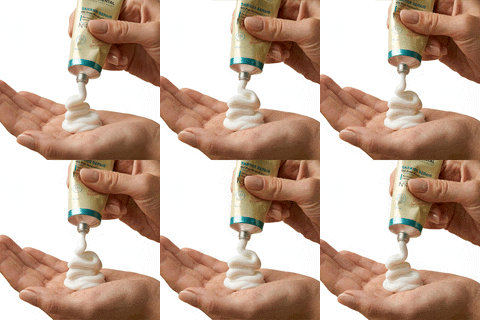
A foam cleanser is a water-activated formula that produces a rich, bubbly lather when you pump or squeeze it out. That satisfying foam comes from surfactants — chemical agents that bind to oil and water simultaneously, lifting away sebum and impurities from the skin surface.
The most commonly used surfactants in traditional foam cleansers are Sodium Lauryl Sulfate (SLS) and Sodium Laureth Sulfate (SLES). These are powerful, efficient at breaking down grease, and they're the reason your face feels "squeaky clean" post-wash.
Here's the problem.
That "squeaky clean" sensation often means your cleanser has stripped your skin's natural lipids, leaving your barrier compromised and your sebaceous glands scrambling to overproduce oil in response. This leads to what dermatologists call "rebound oiliness" — a cycle where the more aggressively you clean, the more oil your skin produces to protect itself, which leads to more breakouts.
Over-cleansing with strong foaming washes strips the barrier, triggering the skin to overproduce oil as a protective response — making the oiliness worse, not better.
This is the core issue with many traditional foam cleansers in the Indian market. They feel effective because of the heavy lather, but that lather is often doing more harm than good on acne-prone skin.
That said — not all foam cleansers are the enemy. Modern formulations using gentler surfactants like Decyl Glucoside, Cocamidopropyl Betaine, and Sodium C14-16 Olefin Sulfonate (milder alternatives to SLS) can foam without stripping. The ingredient list tells the real story, not the lather.
What Is a Gel Based Cleanser — and Why Is It Different?
A gel based cleanser has a clear or translucent, jelly-like consistency. It uses milder surfactants that clean the skin without generating dense foam. When you apply it, it spreads smoothly, may create a light, low-foam lather, and rinses off completely without leaving residue.
Because gel cleansers typically use gentler surfactants, they're less likely to disrupt your skin's natural moisture barrier. They cleanse effectively — removing everyday dirt, oil, and pollution — without leaving that tight, squeaky-clean feeling that signals your skin has been over-stripped.
More importantly, gel textures are excellent vehicles for active ingredients like Salicylic Acid and Benzoyl Peroxide. They rinse off completely without leaving a film or drying out the skin.
This last point is crucial. If your acne face wash contains an active ingredient — and it should — the cleanser's base texture determines how effectively that active is delivered to your skin and how long it stays in contact with the surface before being rinsed away.
The Great Summer Debate: Side-by-Side Comparison
|
Feature |
Foam Cleanser |
Gel Based Cleanser |
|
Primary surfactants |
Often SLS/SLES (harsh) |
Milder alternatives (Decyl Glucoside, etc.) |
|
Lather |
Rich, heavy |
Light or moderate |
|
Oil removal |
Aggressive |
Balanced |
|
Barrier impact |
Can strip moisture barrier |
Preserves moisture barrier |
|
Suitable for sensitive skin |
Risk of irritation |
Generally safer |
|
Active ingredient delivery |
Less effective |
More controlled and even |
|
Post-wash feel |
Tight, dry |
Clean, comfortable |
|
Ideal climate |
Cooler, drier months |
Humid Indian summers |
|
Breakout risk (barrier stripping) |
Higher |
Lower |
Why Gel Cleansers Cause Fewer Breakouts in Indian Summers
Here is the straightforward science of it.
Breakouts don't happen because your face is dirty. They happen because of a combination of excess sebum, clogged pores, bacterial proliferation, and inflammation. Aggressive cleansing does not help much. Balanced cleansing does.
When you use a foam cleanser with harsh surfactants twice daily in a hot, humid Indian summer, the following chain reaction begins:
- The cleanser strips excess oil — along with your skin's natural, protective lipids.
- Your skin registers the moisture deficit and signals the sebaceous glands to produce more oil.
- Excess sebum floods the pores, creating congestion.
- The compromised barrier is more susceptible to bacterial infiltration.
- Inflammation follows. Breakouts appear.
A gentle cleanser for oily skin — formulated in a gel base — interrupts this cycle at the first step. Gel cleansers are generally better for acne-prone skin because they're less likely to strip the skin barrier, which can trigger increased oil production and worsen breakouts.
Additionally, Indian summers come with high sweat output, which means more frequent cleansing for many people. A gel cleanser for oily skin offers a cooling effect during Indian summers, making it ideal for those who need to cleanse more than once during the day. Using a barrier-stripping foam cleanser twice daily is where most people unknowingly accelerate their breakout cycle.
The Role of Actives in Your Cleanser — And Why Formulation Matters More Than Texture
Many people assume that if a cleanser contains an active ingredient like Benzoyl Peroxide or Salicylic Acid, the texture doesn't matter. This is incorrect.
The texture of your cleanser determines:
- How evenly the active is distributed across the skin surface.
- How long it stays in contact with skin before being rinsed.
- Whether it penetrates the pore or just sits on the surface.
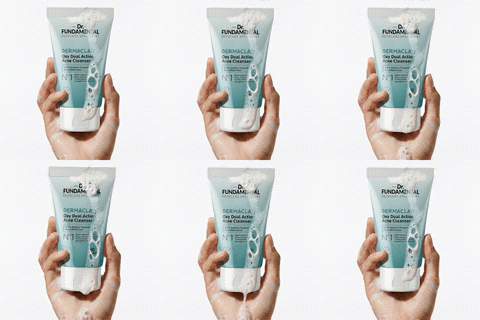
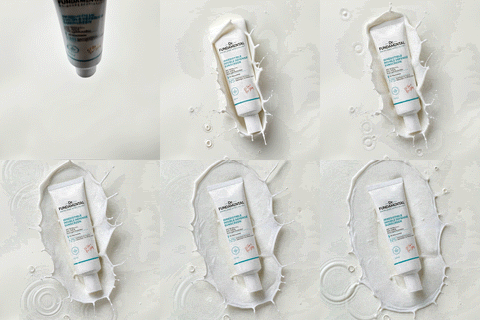
This is why DR. Fundamental formulated the Dermaclar Oxy Acne Cleanser as a gel based cleanser. The 2.5% Encapsulated Benzoyl Peroxide is suspended in a gel base that allows it to spread evenly across oily or congested skin, deliver the active into pores without causing widespread dryness, and rinse away cleanly without residue.
Benzoyl Peroxide in a gel formulation is particularly effective because it reaches the anaerobic environment inside pores where C. acnes bacteria thrive — killing the bacteria at the source rather than just cleaning the skin surface.
The "encapsulated" delivery system is another significant differentiator. Standard Benzoyl Peroxide is reactive; it can oxidize quickly and cause unnecessary irritation. Encapsulated Benzoyl Peroxide releases gradually upon skin contact, providing sustained antibacterial activity without the aggressive drying and peeling associated with older formulations.
Who Should Actually Use a Foam Cleanser?
This isn't about declaring foam cleansers useless. Context matters.
Foam cleansers — specifically sulphate-free, modern formulations — can be appropriate when:
- Your skin is very heavily congested and you're doing a nighttime cleanse after full-coverage SPF.
- You're removing heavy makeup or long-wear base products.
- You have extremely resilient, non-sensitive oily skin that tolerates stronger surfactants.
- You use a foam cleanser at night (for deeper cleansing) and a gel cleanser in the morning for a balanced routine.
The risk with foam cleansers rises significantly in Indian summer conditions when:
- You're cleansing more than once a day.
- You already have an impaired skin barrier from using activities like retinoids or AHAs.
- Your skin shows signs of sensitivity — redness, tightness, or reactive breakouts.
- You are a teenager or young adult with hormonally active sebaceous glands.
In all these cases, switching to a gentle cleanser for oily skin in a gel formulation is the more rational, dermatologically sound choice.
What to Look for in a Cleanser for Oily Skin in India
Whether you choose gel or foam, here are the non-negotiables for an acne face wash that works in Indian conditions:
Ingredients TO look for:
- Benzoyl Peroxide (2.5% is effective and gentler than 5% or 10%)
- Salicylic Acid (BHA that dissolves oil inside pores)
- Niacinamide (regulates sebum and soothes inflammation)
- Glycerin or Hyaluronic Acid (hydration to prevent rebound oiliness)
- Panthenol and Allantoin (barrier-soothing agents)
- Mild surfactants: Decyl Glucoside, Cocamidopropyl Betaine
Ingredients TO avoid:
- Sodium Lauryl Sulfate (SLS)
- Sodium Laureth Sulfate (SLES)
- Alcohol (drying, irritating)
- Synthetic fragrance (inflammatory, sensitising)
- High concentrations of essential oils (comedogenic risk)
- Parabens and harsh preservatives
In gel cleansers, seek out hyaluronic acid for hydration, ceramides for barrier support, and gentle surfactants like coco-glucoside.
How DR. Fundamental's Dermaclar Oxy Acne Cleanser Addresses the Indian Summer Problem
The Dermaclar Oxy Acne Cleanser by DR. Fundamental was built specifically for oily, acne-prone Indian skin — not adapted from a Western formula and repackaged.
Here's why it works for Indian summers:
2.5% Encapsulated Benzoyl Peroxide — kills acne-causing bacteria in as little as one minute of contact, reducing active breakouts without the harsh side effects of higher concentrations.
Gel base with mild surfactants (Sodium C14-16 Olefin Sulfonate, Decyl Glucoside, Cocamidopropyl Betaine) — removes excess sebum, sweat, and pollution without stripping the acid mantle or disrupting the skin's natural pH.
Hyaluronic Acid and Panthenol — replenish moisture during cleansing to prevent the rebound oiliness loop. This is particularly critical in summer when skin loses more water through perspiration.
Allantoin — a soothing ingredient that calms heat-related skin irritation and supports faster barrier recovery.
Salicylic Acid — works alongside Benzoyl Peroxide to exfoliate inside the pore and prevent future congestion.
Fragrance-free and non-comedogenic — eliminates two of the most common allergens and breakout triggers in Indian skincare products.
The result is a cleanser for oily skin that is therapeutic without being traumatic — effective enough to treat active acne, gentle enough to use twice daily even in peak summer.
Your Summer Cleansing Routine — A Practical Guide
Morning:
Use the gel based cleanser to remove overnight oil and prep skin for active ingredients. 2 minutes of gentle, circular massage. Rinse with lukewarm water. Follow immediately with a lightweight serum and non-comedogenic moisturizer before sunscreen.
Evening/Post-Gym:
If wearing heavy sunscreen or SPF with a physical base, start with an oil-based micellar water or gentle cleansing oil to break down the SPF. Follow with the acne face wash as a second cleanse to treat pores and control bacterial activity.
Mid-day (if needed):
If your skin gets very oily and you want to cleanse mid-day, use the gel cleanser once — not a foam product. Foam cleansers mid-day risk over-stripping already heat-stressed skin.
Pro tip: Always follow your cleanser with a barrier-supportive moisturizer, even if your skin is oily. Dehydrated, oily skin is one of the most common drivers of summer acne.
The Verdict
For Indian skin during summer months, a gel based cleanser with the right actives wins — not because foam cleansers are universally bad, but because the Indian summer climate specifically demands a formula that controls oil without triggering the rebound cycle.
The most breakouts in summer happen not because people aren't cleansing — but because they're cleansing too aggressively. The skin responds by producing more oil. More oil means more congestion. More congestion means more breakouts. The cleanser you thought was solving the problem is actually driving it.
A gentle cleanser for oily skin in a gel base, powered by Benzoyl Peroxide and supported by hydrating actives, does what summer skin actually needs: clean deeply, treat effectively, and leave the barrier intact.
That's the exact brief the DR. Fundamental Dermaclar Oxy Acne Cleanser was designed around.