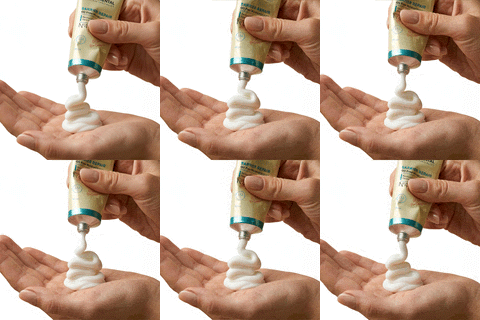






If your face starts looking shiny just a few hours after washing, or if you're constantly dealing with breakouts despite following a skincare routine, you're not alone.
Many people with oily acne-prone skin struggle to find the right balance. Some avoid moisturizers because they fear clogged pores, even when a moisturizer for oily acne prone skin could actually help support balance. Others use strong cleansers and acne treatments in an attempt to control oil, only to end up with irritated, dehydrated skin.
The truth is that oily skin isn't simply about excess oil. In many cases, it is also linked to dehydration, a weakened skin barrier, and environmental stressors. This becomes even more challenging in India, where heat, humidity, pollution, and long hours outdoors can affect how the skin behaves.
A well-designed morning and evening skincare routine can make a significant difference. Instead of fighting your skin, the goal should be to support it with the right products and habits.
In this guide, we'll walk through a complete AM and PM routine specifically designed for oily acne-prone skin while exploring why ingredients such as Panthenol and Ceramides have become increasingly important in modern barrier-focused skincare.
Understanding Oily Acne-Prone Skin in Indian Conditions
Indian weather conditions can be particularly demanding on the skin. During hot and humid months, sweat mixes with excess sebum, sunscreen, dust, and environmental pollutants. This combination can contribute to clogged pores and recurring breakouts.
However, oil production is only one piece of the puzzle.
Many individuals with oily skin unknowingly damage their skin barrier through over-cleansing, excessive exfoliation, and the frequent use of harsh acne products. When the skin barrier becomes compromised, it loses moisture more easily and may react by producing even more oil to compensate.
This creates a frustrating cycle where the skin feels greasy on the surface but remains dehydrated underneath.
Understanding this relationship between hydration, oil production, and barrier health is often the first step toward building a more effective skincare routine.
Common Mistakes People Make With Oily Acne-Prone Skin
One of the biggest misconceptions about oily skin is that it does not need moisture.
As a result, many people skip moisturizer altogether. Unfortunately, this can leave the skin dehydrated and more vulnerable to irritation.
Another common mistake for oily acne-prone skin is washing the face multiple times a day. While it may temporarily reduce shine, excessive cleansing can strip away essential moisture and weaken the skin's protective barrier.
Over-exfoliation is another issue. Whether it's physical scrubs, acids, or multiple exfoliating products layered together, too much exfoliation can lead to redness, sensitivity, and increased breakouts.
Many people also fall into the trap of constantly changing products after seeing trends online. A skincare routine works best when given enough time to deliver results. Frequently switching products often creates more confusion than progress.
AM Skincare Routine for Oily Acne-Prone Skin
Your morning routine should focus on cleansing, hydration, protection, and maintaining skin balance throughout the day.
Step 1: Start With a Gentle Cleanser
The purpose of a morning cleanser is to remove overnight oil and impurities without disrupting the skin barrier.
Choose a gentle cleanser that leaves your skin feeling fresh and comfortable rather than tight and dry.
After cleansing, your skin should feel clean but not stripped.
Step 2: Add a Lightweight Hydrating Layer
Hydration is often overlooked by people with oily skin.
Remember that hydration and oil are not the same thing. Hydration refers to water content within the skin, while oil refers to sebum production.
A lightweight hydrating serum or toner can help improve skin comfort and support overall skin health without making the face feel greasy.
Step 3: Apply a Moisturizer
Many people with oily skin hesitate at this step, but a properly formulated moisturizer for oily acne prone skin can actually help maintain balance.
The ideal moisturizer should feel lightweight, absorb quickly, and support the skin barrier without clogging pores.
Look for features such as:
- Lightweight texture
- Non-comedogenic formulation
- Fast absorption
- Barrier-supporting ingredients
A good moisturizer helps maintain hydration throughout the day while reducing the uncomfortable tightness that often follows cleansing.
Step 4: Protect With Sunscreen
Sunscreen is one of the most important parts of any skincare routine.
Daily UV exposure can contribute to premature aging, uneven skin tone, and the appearance of post-acne marks.
Choose a sunscreen that feels comfortable on oily skin and provides broad-spectrum protection. Consistent use is more important than finding a perfect product.
PM Skincare Routine for Acne-Prone Skin
While the morning routine focuses on protection, the evening routine is all about recovery and repair.
Step 1: Cleanse Thoroughly
Throughout the day, your skin collects sweat, excess oil, pollution particles, and sunscreen residue.
A thorough but gentle cleanse helps remove these impurities and prepares the skin for the rest of your routine.
Step 2: Use Targeted Treatments if Needed
If you use acne treatments or barrier-supportive serums, apply them after cleansing.
Avoid combining too many active ingredients at once. Simpler routines are often easier for the skin to tolerate and maintain.
Step 3: Focus on Moisturization
Nighttime is when your skin naturally undergoes repair processes.
Using a lightweight moisturizer during this time helps support hydration and skin comfort while you sleep.
Step 4: Prioritize Consistency
One of the biggest skincare lessons is that consistency matters more than complexity.
A simple routine followed every day will almost always outperform an elaborate routine used occasionally.
Why Skin Barrier Repair Deserves More Attention Than Oil Control
Many people spend years trying to eliminate oil without realizing that barrier health may be the underlying issue.
The skin barrier acts as the body's first line of defense against environmental stressors. It also helps retain moisture and maintain overall skin balance.
When this barrier becomes compromised, the skin may feel irritated, tight, dehydrated, or more reactive than usual.
This is where a 5% Panthenol moisturizer for acne prone skin can play an important role.
Panthenol, also known as Pro-Vitamin B5, is valued for its ability to attract and retain moisture while helping improve skin comfort.
For oily acne-prone skin, Panthenol offers hydration without the heavy feel often associated with richer moisturizing products.
Many people find that barrier-supportive ingredients like Panthenol help their skin feel calmer and more balanced over time.
How Ceramides Support Oily Acne-Prone Skin
Ceramides are naturally present within the skin barrier and help maintain its structure.
You can think of them as part of the glue that keeps the skin barrier intact and functioning properly.
Factors such as harsh cleansers, environmental exposure, and excessive exfoliation can reduce barrier efficiency over time.
A ceramide moisturizer for oily skin helps replenish essential lipids that support barrier function.
Ceramides offer several benefits, including improved moisture retention, enhanced skin comfort, and better support for long-term skin health.
Contrary to popular belief, Ceramides are not only beneficial for dry skin. Oily and acne-prone skin can also benefit significantly from barrier-supportive ingredients that help maintain resilience and hydration.
A Real-Life Example: Building a Better Routine
Consider the experience of a college student living in Jaipur who struggled with oily acne-prone skin for years.
Like many people, she believed frequent cleansing was the answer. She washed her face several times a day, skipped moisturizer, and regularly tried new acne products.
Despite these efforts, her skin remained oily and prone to breakouts.
Eventually, she simplified her routine.
She switched to a gentle cleanser, introduced consistent hydration, started using a lightweight moisturizer, and committed to daily sunscreen use.
Within a few weeks, she noticed her skin felt more comfortable. The tightness after cleansing reduced, hydration improved, and oil levels became easier to manage.
The biggest improvement came not from a single product but from adopting a consistent barrier-focused routine.
Personal Insights: What Oily Skin Often Needs Most
One of the most common misconceptions in skincare is that oily skin should be treated aggressively.
In reality, many people with oily skin unknowingly create additional problems by over-cleansing, over-exfoliating, or skipping hydration.
Over the years, one pattern has become clear: when oily skin receives adequate hydration and barrier support, it often behaves more predictably.
Another important lesson is that moisturizers are not the enemy.
The right moisturizer for oily acne prone skin can help support hydration, reduce discomfort, and contribute to a healthier-looking complexion without leaving behind a greasy finish.
Healthy skin is rarely the result of doing more. More often, it comes from doing the right things consistently.
Conclusion
Managing oily acne-prone skin is not about removing every trace of oil from your face. It's about creating balance.
A thoughtful morning and evening routine built around gentle cleansing, hydration, barrier support, and sun protection can help improve skin comfort and overall appearance over time.
Ingredients such as Panthenol and Ceramides are particularly valuable because they focus on supporting the skin barrier rather than simply masking symptoms.
If you're looking for a moisturizer for oily acne prone skin, a 5% Panthenol moisturizer for acne prone skin, or a ceramide moisturizer for oily skin, choosing a lightweight barrier-focused formulation may be one of the most effective steps toward a healthier skincare routine.
At Dr. Fundamental, the focus remains on supporting skin health through science-backed hydration and barrier repair, helping users build routines that are practical, sustainable, and suitable for everyday life.