





You splash water on your face, lather up a cleanser, rinse within five seconds, and call it done. Sound familiar? Most of us treat face washing as an afterthought — something we rush through before bed or between meetings. But here's the thing: what you leave on your skin, and for how long, matters a whole lot more than the product itself.
If you have oily or acne-prone skin, you've probably heard someone say "leave your cleanser on for two minutes." Is that real advice — or just internet noise? Let's get into the actual science behind cleanser contact time, what it means for your skin, and how to do it right without overdoing it.
What Is "Contact Time" and Why Should You Care?
Contact time simply refers to how long your cleanser stays on your skin before you rinse it off. It sounds trivial, but the duration directly impacts how well the active ingredients in your cleanser can do their job.
Think of it this way: your skin at the end of the day is coated with layers of sweat, pollutants, excess sebum, sunscreen residue, and dead skin cells. A five-second rinse doesn't cut through all of that. The surfactants and actives in your gel based cleanser need enough time to penetrate, emulsify, and lift these impurities away from the skin's surface.
A rushed wash often leaves a microscopic film of residue behind, which not only hinders the absorption of serums that follow but can also contribute to dullness and congestion over time. That alone should make you rethink your sink-side habits.
The Science Behind the 2-Minute Rule
Here's where it gets interesting. The idea of cleansing for a full two minutes isn't a beauty myth — board-certified dermatologist Dr. Brooke Jeffy confirms that people with oily skin or those wearing heavy makeup can experiment with cleansing for up to a maximum of two minutes.
For oily or acne-prone skin specifically, cleansing for up to two minutes helps ensure a more thorough clean. The reason? Excess oil production means there's more build-up sitting on and inside your pores. Your cleanser needs more time to dissolve those layers of sebum, debris, and dead skin.
Allowing the cleanser one to two minutes to dissolve impurities and purge pores is ideal for clear, shine-free skin — and active ingredients like salicylic acid also need sufficient time against your skin to work effectively against acne.
This is especially true for a gel cleanser for oily skin formulated with BHA (beta-hydroxy acid). Salicylic acid is oil-soluble, which means it needs actual dwell time to travel into the pore lining, break down hardened sebum, and reduce inflammation. If you rinse it off in ten seconds, you're essentially wasting the ingredient.
But Wait — Can You Leave It On Too Long?
Absolutely. Two minutes is the upper limit, not a suggestion to go further. When a cleanser is left on the skin for too long, its surfactants can begin to disrupt the essential protective lipids that form your skin's delicate barrier — leading to that uncomfortable, stripped, tight feeling, and triggering a frustrating cycle of irritation and dehydration.
More time doesn't mean a better clean. Leaving cleanser on too long can strip the skin of natural oils, leading to dryness, irritation, and even more breakouts.
This is a trap many people with acne-prone skin fall into — thinking that a longer cleanse equals a deeper cleanse. It doesn't. Over-cleansing disrupts your skin barrier, triggers a rebound oil surge, and makes breakouts worse. The sweet spot for oily and acne-prone skin is 60 to 120 seconds — no more, no less.
Contact Time by Skin Type: A Quick Reference
|
Skin Type |
Ideal Contact Time |
Cleanser Type |
|
Oily / Acne-Prone |
60 – 120 seconds |
Gel based cleanser with salicylic acid or BHA |
|
Combination |
45 – 60 seconds |
Gentle gel or light foam |
|
Normal |
30 – 60 seconds |
Gel, foam, or cream |
|
Dry / Sensitive |
15 – 30 seconds |
Cream or hydrating gel |
How to Do It Right: The Proper Cleansing Method for Oily Skin
Knowing the time is only half the picture. How you spend those two minutes matters just as much.
Step 1 — Wet your face with lukewarm water. Hot water strips oils and signals your skin to produce more. Lukewarm is ideal for maintaining balance.
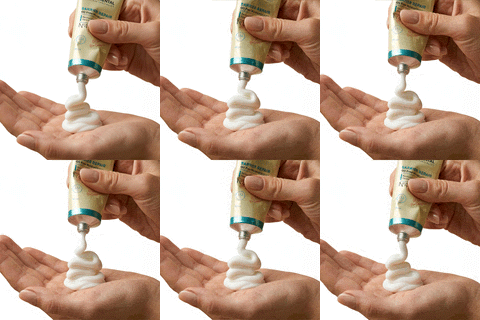
Step 2 — Apply a pea-sized amount of your cleanser. Contrary to what most people think, more product doesn't equal more clean. A small amount is sufficient.
Step 3 — Massage in gentle circular motions for 60–120 seconds. Use light, circular motions with your fingertips to boost circulation and penetration — avoid aggressive scrubbing, which can lead to irritation and micro-tears.
Step 4 — Pay attention to oily zones. Spend extra time on your T-zone — forehead, nose, and chin — where excess sebum tends to accumulate and pores are most congested.
Step 5 — Rinse thoroughly with cool or lukewarm water. Don't leave any residue behind. Cleanser left on the skin can itself clog pores.
Step 6 — Pat dry — never rub. A clean towel, gentle patting motion. Done.
Why a Gel Cleanser Works Best for Oily, Acne-Prone Skin
Not all cleansers are created equal, and this matters more than most people realise. A cream cleanser designed for dry skin is not going to work for someone with an oily T-zone and active breakouts.
Gel cleansers are generally best suited for oily skin as they cut through grease efficiently without leaving a heavy residue behind. Their lightweight, water-based texture allows actives to spread evenly across the skin's surface during the massage phase, which means every second of your two-minute cleanse is actually doing something.
A gel cleanser for oily skin with acne-fighting activities like salicylic acid, niacinamide, or zinc hits multiple targets at once — controlling oil, clearing congestion, reducing inflammation, and preventing future breakouts. That's why the formulation of your cleanser matters as much as the time you spend with it.
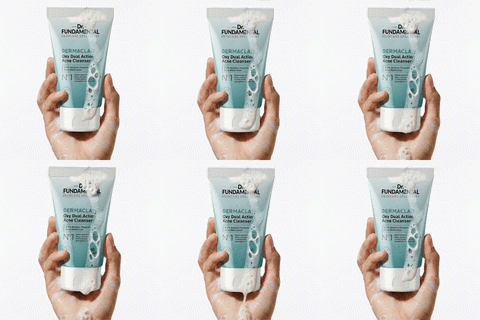
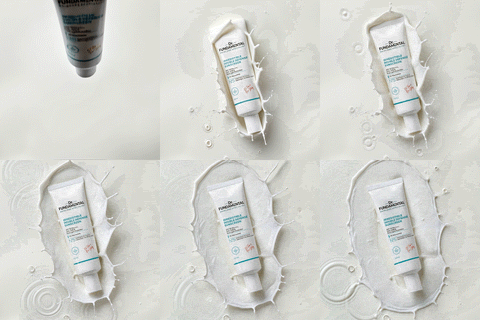
Dr. Fundamental's Dermaclar Oxy Acne Cleanser is built specifically for this skin type and this purpose. Designed to work with prolonged contact time in mind, its active-forward formula targets excess sebum and active breakouts without stripping the skin's natural moisture barrier. So those two minutes you're now committing to? They'll actually count.
The Mistake You Didn't Know You Were Making
Here's a common one: people switch to a gel based cleanser thinking it'll fix everything, but they continue rinsing it off in under 15 seconds. Then they wonder why their skin isn't improving.
The cleanser isn't the problem. The contact time is.
For acne-prone skin, over-cleansing can worsen irritation and trigger more oil production in response — so the goal is to cleanse consistently, not aggressively. Two mindful minutes with the right formula, twice a day, beats five aggressive 30-second washes any day of the week.
Morning vs. Night: Does Contact Time Change?
Slightly, yes.
In the morning, your skin hasn't accumulated a full day's worth of pollution and makeup. A 60-second cleanse is enough to remove the overnight sebum and prep your skin for SPF and actives.
At night, especially if you've worn sunscreen, makeup, or been in a polluted environment, leaning toward the 90–120 second mark makes sense. This is when your gel cleanser for oily skin with BHA or oxygen-based actives can really do the heavy lifting — dissolving built-up impurities, clearing congestion from the day, and giving your skin a clean canvas for overnight repair.